

PHEV vs. Hybrid vs. Full EV: Which Is Right for You in 2026?
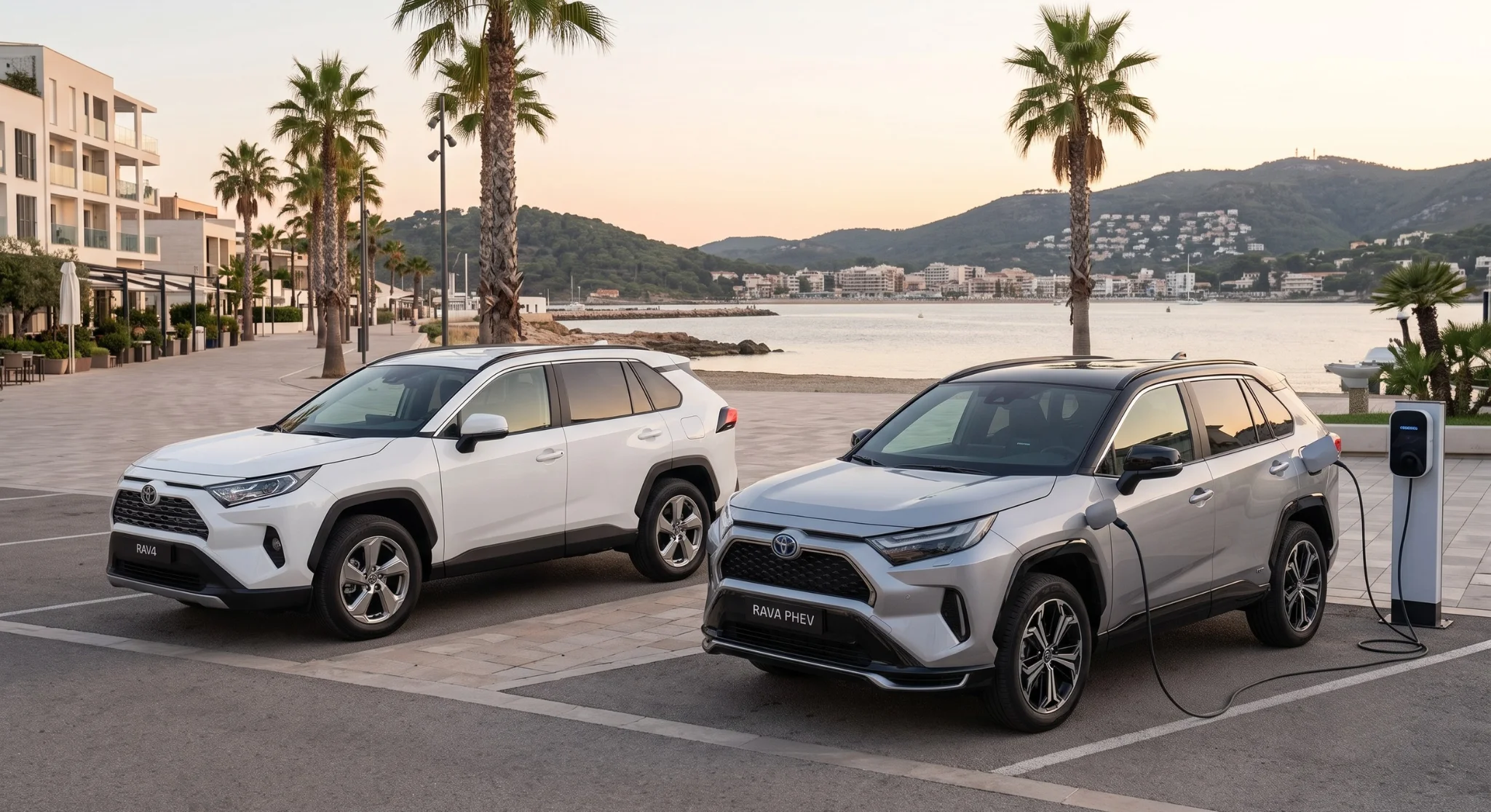
Choosing a new vehicle in 2026 means navigating a rapidly expanding landscape of electrified powertrains. The three main options differ in a few core ways. A hybrid, a plug-in hybrid (PHEV), and a full electric vehicle (EV) each vary in the size of their battery packs, how those batteries are recharged, and how much a gasoline engine is involved in driving the wheels.
A traditional hybrid pairs a small battery pack and an electric motor with a gasoline engine. It captures energy during braking to ease the load on the gas engine and improve fuel economy. A plug-in hybrid is the middle ground. It uses a much larger battery you can charge from an outside source, so it can travel a set distance on electricity before switching to standard hybrid operation. A full electric vehicle removes the gasoline engine entirely and runs only on a high-capacity battery and electric motors.
Those differences shape which powertrain fits your driving habits. Traditional hybrids require zero lifestyle change. They drive like a gas car while delivering better fuel economy. Plug-in hybrids offer gas-free daily commutes if you charge regularly, plus the freedom to take long road trips without stopping to plug in. Full electric vehicles deliver the quietest ride, the quickest acceleration, and no tailpipe emissions or gas stops, as long as you have access to charging.
If you’re weighing these options, OREMOR Automotive Group’s lineup spans all three technologies across the brands we carry.
Hybrid vs. Plug-In Hybrid vs. Full EV at a Glance
| Attribute | Hybrid (HEV) | Plug-In Hybrid (PHEV) | Full Electric (EV) |
|---|---|---|---|
| Battery pack | Small | Larger, mid-size | Large, high-capacity |
| How it charges | Regenerative braking and the gas engine (no plug) | Plug in at Level 1 or Level 2, plus regen and engine | Plug in only (Level 1, Level 2, or DC fast charging) |
| Gasoline engine | Yes, primary, with motor assist | Yes, engages after electric range is used | None |
| All-electric range | None, the motor only assists | A set electric-only range, then hybrid mode | The full range runs on battery |
| Best suited for | Maximum fuel economy, no routine changes | Short electric commutes plus long gas road trips | Zero tailpipe emissions with home charging |
Do Standard Hybrids Ever Need to Plug In, and What Happens When a PHEV Battery Runs Dry?
A common misconception is that anything with an electric motor must be plugged into a wall outlet. For a standard hybrid, that isn’t true. Traditional hybrids have no charge port and no hardware to accept external charging. They run a closed loop instead. The vehicle recaptures energy normally lost as heat during braking, a process called regenerative braking, and uses the gas engine as a generator to keep the battery charged.
Plug-in hybrids work differently, but they’re built so a dead battery never leaves you stranded. When a PHEV runs out of electric power, its computer engages the gasoline engine automatically. The vehicle shifts into standard hybrid mode with no drop in drivability or performance.
From there, the PHEV keeps using regenerative braking to top up its smaller hybrid reserve. Say you deplete the all-electric range on the highway. The gas engine takes over primary propulsion, while the electric motor still assists during acceleration and low-speed driving. That dual-source design is what makes plug-in hybrids practical for long-distance drivers in areas where public charging is scarce. For a closer look at how these two systems compare, see our hybrid vs. plug-in hybrid overview.
Charging a PHEV at Home, and the Cost Step-Up From a Hybrid
For most plug-in hybrid owners, charging happens entirely at home. You don’t necessarily need to install expensive equipment. A PHEV charges from a standard 120V household outlet, known as Level 1 charging. Because PHEV battery packs are much smaller than those in a full EV, a standard outlet can typically refill the electric range overnight. Stepping up to a 240V Level 2 charger shortens that time considerably.
Compared with an equivalent standard hybrid, a PHEV usually costs more up front. The gap is often several thousand dollars within the same trim level. It reflects the larger lithium-ion battery pack, the more capable onboard charger, and the extra electronics needed to run two propulsion sources.
The 2026 Toyota Prius makes a useful benchmark. The standard hybrid uses a 2.0L four-cylinder engine that produces a combined 194 horsepower and 139 lb-ft of torque. It pairs with an electronically controlled continuously variable transmission (eCVT). Front-wheel drive is standard, and all-wheel drive is available. The Prius starts around $29,745 TSRP and earns an EPA-estimated 57 mpg in the city on the front-wheel-drive LE. Toyota also offers a plug-in version, the Prius Plug-in Hybrid. It carries the usual PHEV premium in exchange for real electric-only driving, so your choice comes down to how much of your daily driving can run on electricity. You can browse OREMOR’s electrified Toyota lineup to compare the Prius, Prius Plug-in Hybrid, and bZ4X in person. View our locations to get started.
EPA-estimated fuel economy figures are for comparison purposes only. Your actual mileage will vary depending on driving conditions, how you drive and maintain your vehicle, battery age/condition, and other factors.
Total Suggested Retail Price (TSRP) for new vehicles includes manufacturer and distributor options and delivery, processing, and handling fees, which are subject to change at any time. TSRP excludes taxes, title, license, dealer-installed options, accessories, fees and charges. TSRP is not the dealer advertised price. Dealer price will vary. The dealer sets the final price.
How Far Do 2026 EVs Go?
For drivers ready to leave gasoline behind, range is usually the first question. In 2026, battery and aerodynamic gains have pushed the typical EPA-estimated range of a new full EV to roughly 250 to 350 miles. Efficient models go further. The rear-wheel-drive 2026 Hyundai IONIQ 5, with its 84 kWh battery, carries an EPA-estimated range of 318 miles. That’s enough to handle a full week of local driving between charges. You can explore the Hyundai IONIQ 5 to see current configurations. View our locations to get started.
Battery size also shapes the value equation. Some entry-level EVs reach their low price with smaller packs. They’re efficient for local driving but offer a shorter range, closer to 200 to 250 miles. For drivers who mostly commute in town and can charge at home, those budget EVs are a cost-effective way into zero-emission driving.
EPA-estimated fuel economy figures are for comparison purposes only. Your actual mileage will vary depending on driving conditions, how you drive and maintain your vehicle, battery age/condition, and other factors.
Towing With Hybrids, PHEVs, and EVs: The Range Loss You Should Expect
If you plan to haul trailers, boats, or campers, the powertrain choice matters a lot. Traditional hybrids and plug-in hybrids are generally better for long-distance towing. Gasoline’s energy density lets them hold their towing capacity over hundreds of miles, and a five-minute fuel stop puts you right back on the road.
Full EVs and electric trucks deliver massive instant torque and pull heavy loads confidently off the line. But towing a heavy or boxy trailer typically cuts an EV’s range by 40 to 60 percent. The exact drop depends on speed, terrain, and wind resistance, because drag forces the motors to work far harder. In practice, an electric truck rated for 300 miles may cover only 120 to 150 miles while towing a substantial load. Public DC fast-charging stalls are also rarely built as pull-through lanes for a trailer. For local hauling an EV is smooth and capable. For long-distance towing, a hybrid or PHEV remains the more practical pick.
Maintenance and Oil Changes for Plug-In Hybrids
One appealing part of going electrified is lower maintenance. Full EVs have no engine oil, spark plugs, timing belts, or emissions equipment, which greatly simplifies their service schedules. Plug-in hybrids still have a gasoline engine, so they don’t skip traditional maintenance entirely.
A common PHEV question is whether they need oil changes as often as gas cars. Even if you do nearly all your driving on electricity, the gas engine still needs regular oil changes. Follow your manufacturer’s recommended interval, which is often around every 7,500 to 10,000 miles or once a year. Oil still breaks down over time and can pick up moisture and fuel during short engine runs.
Beyond the engine, electrified drivetrains are durable. Because regenerative braking does much of the slowing, the brake pads and rotors see less wear and can last significantly longer than on a conventional vehicle.
The information in this article is general guidance and does not constitute a specific diagnostic or repair recommendation for any individual vehicle. Repair and maintenance decisions should be made in consultation with a certified technician based on the specific condition of your vehicle.
Quick Answers to Common Electrified Vehicle Questions
Does a standard hybrid ever need to be plugged into an electrical outlet?
No, a standard hybrid cannot be plugged in. Its battery is charged entirely through regenerative braking and the onboard gasoline engine, so you operate it exactly like a traditional gas-powered car.
What happens when a PHEV runs out of electric battery power?
The vehicle automatically transitions to gasoline power and operates as a standard, highly efficient hybrid. You experience no loss of drivability and can continue your journey on the gasoline engine.
Can you charge a PHEV using a standard 120V household wall outlet?
Yes, most plug-in hybrids can be charged overnight using a standard 120V outlet, which makes home charging easy without installing specialized hardware.
Do PHEVs require oil changes as frequently as gas cars?
Plug-in hybrids still require regular oil changes. Follow your manufacturer’s recommended interval, which is often around every 7,500 to 10,000 miles or once a year, so the gasoline engine stays properly lubricated and ready to engage.
Which vehicle type is better for towing, a hybrid, a PHEV, or a full EV?
Hybrids and PHEVs are generally better for long-distance towing, because towing a heavy load can cut a full EV’s range substantially and public charging stations are rarely designed to accommodate trailers.
Finding the Right Electrified Match at OREMOR Automotive Group
The right electrified vehicle comes down to your daily driving, your access to charging, and your budget. Whether you’re drawn to the simplicity of a traditional hybrid, the dual-energy flexibility of a plug-in hybrid, or the zero-emission appeal of a full EV, OREMOR Automotive Group carries electrified models from many of the industry’s leading brands so you can find the right fit.
Disclaimers
EPA-estimated fuel economy figures are for comparison purposes only. Your actual mileage will vary depending on driving conditions, how you drive and maintain your vehicle, battery age/condition, and other factors.
Total Suggested Retail Price (TSRP) for new vehicles includes manufacturer and distributor options and delivery, processing, and handling fees, which are subject to change at any time. TSRP excludes taxes, title, license, dealer-installed options, accessories, fees and charges. TSRP is not the dealer advertised price. Dealer price will vary. The dealer sets the final price.
The information in this article is general guidance and does not constitute a specific diagnostic or repair recommendation for any individual vehicle. Repair and maintenance decisions should be made in consultation with a certified technician based on the specific condition of your vehicle.