

Toyota Hybrid vs. Lexus Hybrid: How the 2026 Lineups Compare
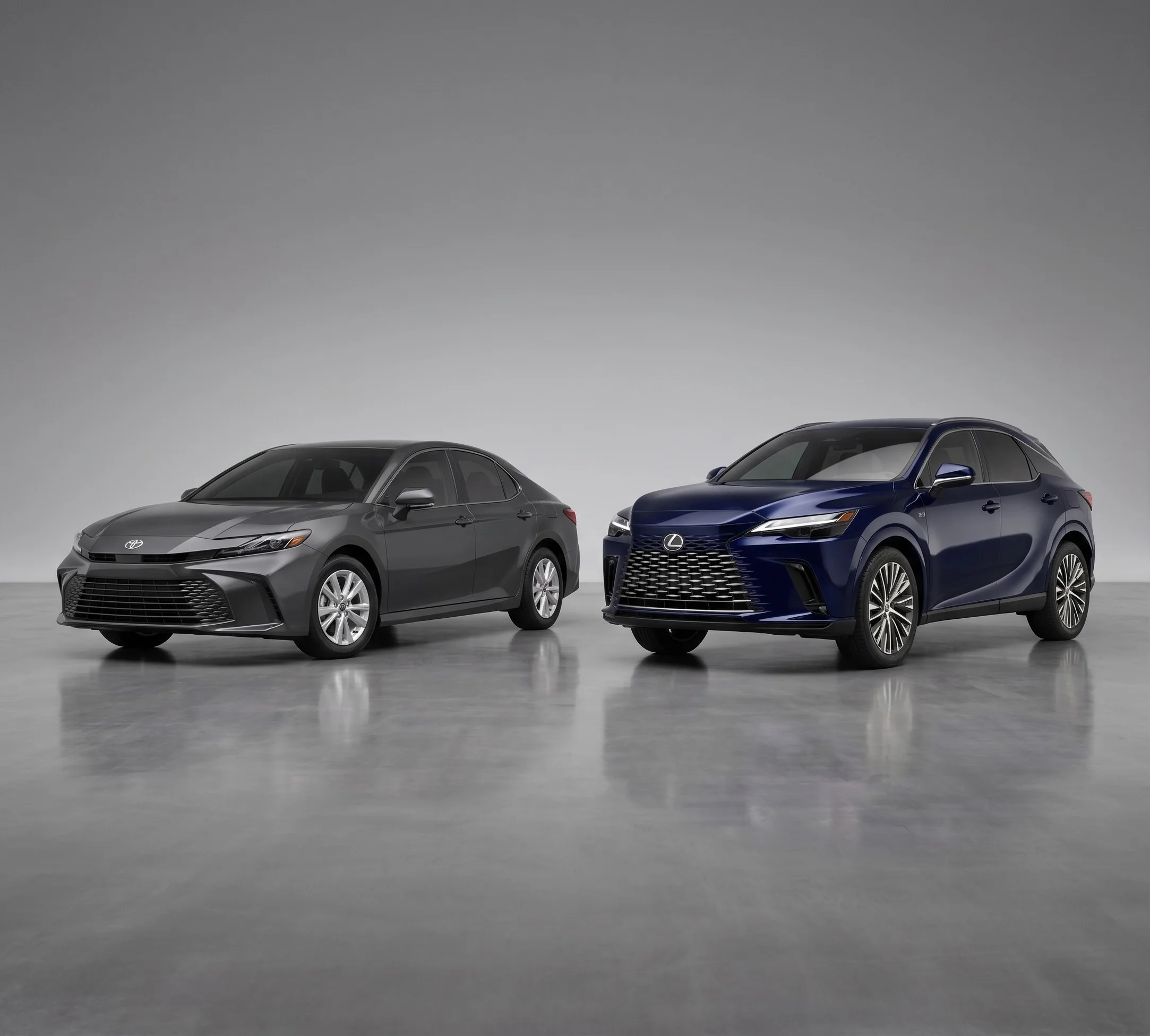
Toyota and Lexus build their hybrids on the same engineering foundation, yet the two brands tune that foundation for very different drivers. If you’re weighing a Toyota hybrid against a Lexus hybrid, the real question isn’t which one is “better” — it’s which set of priorities fits how you actually drive. Because OREMOR Automotive Group sells both the new Toyota hybrid lineup and Lexus across Southern California, this guide compares the two side by side without favoring one badge over the other.
At the core of both lineups is Toyota’s hybrid system, a power-split design that replaces a traditional transmission. In the 2026 Toyota RAV4 Hybrid, that means a 2.5-liter inline-four engine (Toyota’s A25A-FXS) working with two motor-generators through a planetary-type continuously variable transmission. Lexus models use the same basic architecture but layer on higher-output electric motors, additional sound-deadening, and more frequent low-speed electric operation to deliver the quiet, refined ride luxury shoppers expect. On all-wheel-drive hybrids, both brands use a dedicated rear electric motor rather than a mechanical driveshaft — Lexus markets this as E-Four.
OREMOR Automotive Group — serving Southern California with both Toyota and Lexus hybrids. 1377 Kettering Dr, Ontario, CA 91761 | 909-323-0539 | oremorautomotive.com
Is a Lexus Hybrid Worth the Price Premium Over a Toyota?
The honest answer is that you’re paying for refinement, materials, and ownership perks — not for a fundamentally different drivetrain. A Toyota hybrid like the RAV4 prioritizes efficiency and value; a comparably sized Lexus invests that price gap in cabin quietness, richer materials, and a longer standard warranty.
For 2026, the RAV4 is hybrid-only and spans six standard hybrid grades. Here’s how they line up. All figures are TSRP, including destination; fuel economy is manufacturer-estimated combined.
2026 Toyota RAV4 Hybrid — Grades & Pricing
| Grade | Starting TSRP | Combined MPG (mfr. est.) | Drivetrain |
|---|---|---|---|
| LE | $33,350 | Up to 43 | FWD or AWD |
| SE | $36,150 | Up to 43 | FWD or AWD |
| XLE Premium | $37,550 | Up to 43 | FWD or AWD |
| Woodland | $41,350 | Up to 38 | AWD standard |
| XSE | $42,750 | Up to 41 | AWD standard |
| Limited | $44,750 | Up to 41 | AWD standard |
TSRP source: Toyota pressroom (2026 RAV4); figures include the Delivery, Processing and Handling fee. The FWD RAV4 Hybrid (LE, SE, XLE Premium) earns up to an EPA-estimated 47 city / 40 highway / 43 combined.
TSRP disclaimer: TSRP on new inventory covers manufacturer/distributor equipment and logistics fees, all of which are subject to revision. It does not account for taxes, registration, dealer-installed additions, or other local charges. TSRP is not a retail advertisement; actual dealer pricing will vary. The dealer sets the final price.
Fuel economy disclaimer: EPA-estimated fuel economy figures are for comparison purposes only. Your actual mileage will vary depending on driving conditions, how you drive and maintain your vehicle, battery age/condition, and other factors.
The LE and SE are available in front- or all-wheel drive; the Woodland, XSE, and Limited come with AWD standard. A plug-in hybrid RAV4 and a GR SPORT PHEV also exist for 2026, but those are a separate plug-in conversation from the standard hybrids compared here.
Step up to the Lexus side and the money goes toward genuine materials, quieter cabins, and longer warranty coverage. Here’s how the closest Lexus hybrid models are priced for 2026. All figures are MSRP, including destination; fuel economy is EPA-estimated.
2026 Lexus Hybrid Counterparts — Pricing & Output
| Model | Starting MSRP | Combined System HP | Combined MPG (EPA-est.) | Drivetrain |
|---|---|---|---|---|
| NX 350h (compact SUV — RAV4 counterpart) | $45,175 | 240 | About 39 (41 city / 37 hwy) | FWD (AWD +$1,550) |
| RX 350h (two-row midsize SUV) | $52,025 | 246 | 36 (37 city / 34 hwy) | AWD standard |
| RX 500h F SPORT Performance (performance flagship) | $65,400 | 366 | 27 | AWD standard |
MSRP source: Lexus.com and Edmunds (2026 NX/RX); figures include the Delivery, Processing and Handling fee. RX 350h reflects the AWD-standard hybrid. RX 500h is shown as a performance reference rather than a direct RAV4 counterpart.
MSRP disclaimer: MSRP on new inventory covers manufacturer-provided equipment and distributor logistics fees, all of which remain subject to revision. This amount does not account for taxes, registration, dealer-installed additions, or other local charges. MSRP is not a retail advertisement; actual dealer pricing will vary. The dealer sets the final price.
Fuel economy disclaimer: EPA-estimated fuel economy figures are for comparison purposes only. Your actual mileage will vary depending on driving conditions, how you drive and maintain your vehicle, battery age/condition, and other factors.
Lined up directly, the pattern is clear: the compact RAV4 Hybrid starts around $33,350 TSRP while its Lexus platform-mate, the NX 350h, starts around $45,175 MSRP — roughly a $12,000 step up that buys richer materials, a quieter cabin, and longer warranty coverage rather than a fundamentally different drivetrain. Performance buyers can go further with Lexus “Performance Hybrid” models like the RX 500h F SPORT Performance, which pairs a 2.4-liter turbocharged hybrid system for a combined 366 horsepower — a different mission than the efficiency-tuned Toyota hybrids. The decision usually comes down to whether you see your vehicle as a high-efficiency tool or a mobile sanctuary.
Direct Matchups: From the Toyota Camry to the Lexus ES 350h
Sedans: Toyota Camry vs. Lexus ES 350h
The 2026 Toyota Camry is now hybrid-only and leans efficiency-first: its 2.5-liter four-cylinder hybrid produces 225 horsepower with front-wheel drive or 232 horsepower with available Electronic On-Demand all-wheel drive, and the LE FWD earns an EPA-estimated 51 mpg combined — among the highest of any midsize sedan. The redesigned 2026 Lexus ES 350h stays a classic luxury sedan but is more capable than the model it replaces: its sixth-generation hybrid system now produces 244 combined horsepower, and all-wheel drive is available for the first time. Both pair a 2.5-liter four-cylinder with an electric drive system; the Camry prioritizes value and fuel economy, while the ES is tuned for a softer, quieter, more upscale ride.
Compact SUVs: Toyota RAV4 Hybrid vs. Lexus NX 350h
These two share a platform and footprint but split on priorities:
- The RAV4 Hybrid (226 hp FWD / 236 hp AWD) leans practical, with 37.8 cubic feet of cargo space behind the second row and a starting TSRP around $33,350.
- The Lexus NX 350h (240 combined hp) leans tech and refinement, with an available 14-inch touchscreen, an optional 17-speaker Mark Levinson surround sound system, and a starting MSRP around $45,175.
- Acceleration is close — both reach 60 mph in roughly the mid-7-second range — but the NX delivers it with noticeably less engine noise in the cabin.
Two-Row Luxury: Lexus RX 350h vs. Toyota Highlander Hybrid
The five-passenger RX 350h (246 hp, AWD standard, EPA-estimated 36 mpg combined) trades the Highlander’s third row for a more expansive, refinement-first two-row layout. Families often ask which feels quicker on the freeway; the numbers are close, but the Lexus tends to feel more effortless thanks to how its electric motors deliver torque off the line.
Real-World Dependability and Hybrid Reliability
Reliability is why many shoppers shop these two brands in the first place, and current third-party data backs that up. In the J.D. Power 2026 U.S. Vehicle Dependability Study, Lexus ranked highest overall among all brands for the fourth consecutive year (J.D. Power 2026 VDS). In Consumer Reports’ 2026 brand reliability rankings, Toyota and Lexus again placed among the top three brands overall (consumerreports.org). Both brands draw on more than two decades of hybrid refinement, so the 2.5-liter engine and motor-generator sets used across these lineups are among the most proven hybrid powertrains on the market.
One concern that surfaces in colder regions is high-voltage cable corrosion (sometimes called “cablegate”), tied to heavy road-salt use. In the mild Southern California climate served by OREMOR’s dealerships — where road salt isn’t a factor — that risk is minimal, and these hybrid systems routinely reach high mileages on routine maintenance alone. Because the power-split transmission has no belts or clutches to wear out, overall mechanical complexity is actually lower than a conventional gas-only vehicle.
Warranty and Complimentary Maintenance: Toyota vs. Lexus
Warranty coverage is one area where the two brands genuinely differ, and it can tip the decision for long-term owners.
| Coverage | Toyota | Lexus |
|---|---|---|
| Basic | 3 yr / 36,000 mi | 4 yr / 50,000 mi |
| Powertrain | 5 yr / 60,000 mi | 6 yr / 70,000 mi |
| Corrosion (perforation) | 5 yr / unlimited mi | 6 yr / unlimited mi |
| Hybrid System | 8 yr / 100,000 mi | 8 yr / 100,000 mi |
| Hybrid Battery | 10 yr / 150,000 mi | 10 yr / 150,000 mi |
| Roadside Assistance | 2 yr / unlimited mi | 4 yr / unlimited mi |
| Complimentary Maintenance | ToyotaCare — 2 yr / 25,000 mi | First two scheduled visits |
Sources: Toyota pressroom (2026 RAV4) and Lexus.com/warranty. Hybrid battery coverage applies to 2020-and-newer models.
Lexus extends the basic and powertrain coverage by roughly a year over Toyota and adds longer roadside assistance — which tends to appeal to buyers who plan to keep a vehicle six or seven years. Toyota’s shorter basic term is often offset by a lower purchase price, which can make it the more pragmatic pick for high-mileage drivers who’ll pass the mileage limits well before the time limits.
Common Questions About Toyota and Lexus Hybrids
Does a Lexus hybrid cost more to maintain than a Toyota?
The core mechanical service — oil and filter intervals on the shared 2.5-liter engine — is the same. Lexus dealership labor rates are typically higher, and luxury-specific features can add to long-term service costs compared with a standard RAV4 Hybrid.
Is the fuel economy meaningfully different between the brands?
Toyota models generally hold a slight efficiency edge because they’re lighter and run smaller wheels. The FWD RAV4 Hybrid (LE, SE, XLE Premium) is rated up to an EPA-estimated 47 city / 40 highway, while a comparably sized Lexus such as the NX 350h is EPA-estimated around 41 city / 37 highway.
Do these hybrids need to be plugged in at home?
No. Standard hybrids like the RAV4 Hybrid or the Lexus RX 350h charge their own batteries through the engine and regenerative braking. Only plug-in hybrids (such as the RAV4 Plug-in Hybrid or Lexus NX 450h+) plug in — those can use a standard 120V outlet, though a 240V Level 2 charger is recommended for faster charging.
Are the hybrid batteries the same in both brands?
They share the same underlying technology and are produced by the same parent company. Lexus models may use a higher-capacity pack to manage heavier vehicle weights, but the 10-year/150,000-mile hybrid battery warranty is consistent across both lineups.
Which brand holds its value better?
Both are industry leaders in resale value. Toyota hybrids benefit from a larger pool of used buyers due to their lower price point, while Lexus hybrids tend to retain a high percentage of their original luxury MSRP thanks to their premium-segment durability reputation.
Still deciding between efficiency-first value and luxury-grade refinement? Explore both hybrid lineups at OREMOR Automotive Group, or browse our manufacturer research hub for more model comparisons.
Pricing & Disclosures
TSRP on new inventory covers manufacturer/distributor equipment and logistics fees, all of which are subject to revision. It does not account for taxes, registration, dealer-installed additions, or other local charges. TSRP is not a retail advertisement; actual dealer pricing will vary. The dealer sets the final price.
MSRP on new inventory covers manufacturer-provided equipment and distributor logistics fees, all of which remain subject to revision. This amount does not account for taxes, registration, dealer-installed additions, or other local charges. MSRP is not a retail advertisement; actual dealer pricing will vary. The dealer sets the final price.
EPA-estimated fuel economy figures are for comparison purposes only. Your actual mileage will vary depending on driving conditions, how you drive and maintain your vehicle, battery age/condition, and other factors.
Reliability rankings: J.D. Power 2026 U.S. Vehicle Dependability Study; Consumer Reports 2026 brand reliability rankings. Vehicle specifications and pricing sourced from Toyota and Lexus manufacturer materials and verified third-party automotive sources, current as of June 2026. Sources: Toyota pressroom, Lexus.com warranty, J.D. Power, Consumer Reports.