

How Advanced Driver-Assistance Systems (ADAS) Keep You Safe on Ontario Commutes
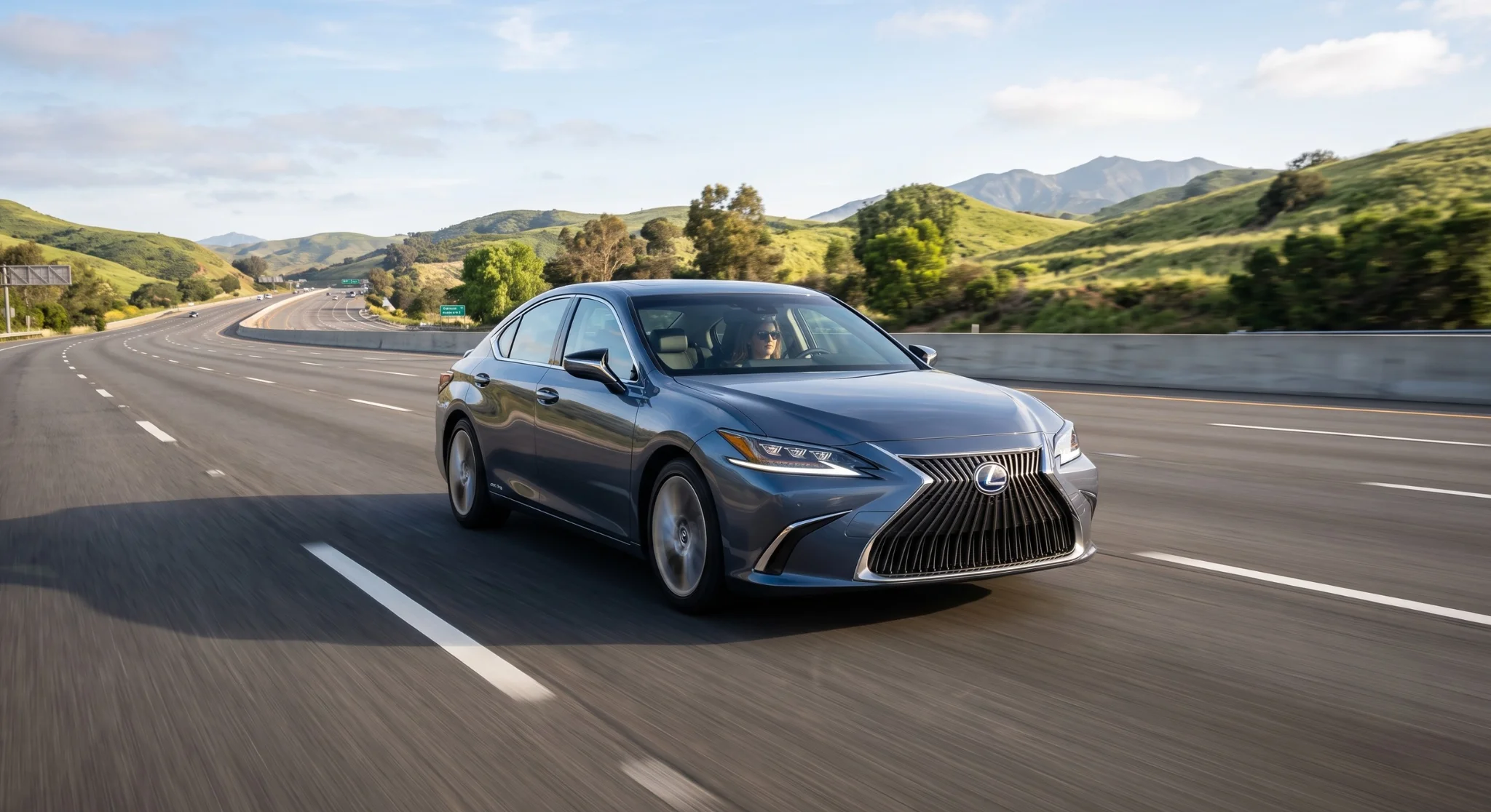
The daily drive through Ontario often means dense freeway traffic and sudden slowdowns. That is especially true around the I-10/I-15 interchange and the SR-60 corridor. To make these trips less stressful, modern vehicles rely on advanced driver-assistance systems, or ADAS. These systems use a network of cameras, radar, and sensors. They monitor the road, identify potential hazards, and help the driver respond to changing conditions. Rather than replacing the driver, they act as a second set of eyes on every trip.
It helps to understand the difference between passive and active systems:
Passive ADAS
Passive systems alert the driver without taking control of the vehicle. For example, a lane departure warning may vibrate the steering wheel or sound a chime if the vehicle drifts out of its lane.
Active ADAS
Active systems take brief control of the steering, brakes, or throttle to help prevent an accident. Forward collision-avoidance assist can apply the brakes. Lane-keeping assist gently steers to keep the vehicle centered.
Many of the vehicles at OREMOR Automotive Group offer these technologies. The 2026 Hyundai Tucson Hybrid is a good example. It includes the Hyundai SmartSense safety suite standard on every trim. That standard suite covers forward collision-avoidance assist with pedestrian and cyclist detection, lane keeping assist, lane following assist, and driver attention warning. Blind-spot collision-avoidance assist arrives on higher trims. So does Highway Driving Assist, which combines steering, acceleration, and braking support with continuous driver supervision, and it comes standard on the Limited. To see how these systems behave in real conditions, visit our Ontario showroom for a test drive, or call our sales team at 909-323-0539.
Mapping Your Vehicle’s Sensors and the Six Levels of Driving Automation
To understand how these systems perceive the world, it helps to see where the hardware sits. A typical modern vehicle combines optical cameras, radar units, and ultrasonic sensors. These are positioned around the exterior:
| Sensor | Typical Location | Primary Function |
|---|---|---|
| Optical cameras | Top of the windshield, behind the rearview mirror | Track lane markings and read traffic signs |
| Millimeter-wave radar | Behind the front grille | Measure the distance and speed of vehicles ahead |
| Ultrasonic sensors | Front and rear bumpers | Close-range detection for parking maneuvers |
| Surround-view cameras | Under the side mirrors, with front and rear cameras | Project a simulated overhead view of the vehicle |
The industry describes these capabilities using the six levels of driving automation. They are defined by SAE International in standard J3016. The scale runs from Level 0, which adds only warnings, to Level 5, full automation under all conditions. Most vehicles with advanced driver-assistance features operate at Level 2, or partial automation:
| Level | Name | Who Drives | What It Does |
|---|---|---|---|
| 0 | No Automation | Driver | Warnings and momentary help, such as automatic emergency braking |
| 1 | Driver Assistance | Driver | Supports steering or speed, but not both at once |
| 2 | Partial Automation | Driver (supervises) | Manages steering and speed together while the driver stays engaged |
| 3 | Conditional Automation | System, in set conditions | Handles driving within limited conditions; the driver takes over when prompted |
| 4 | High Automation | System, in set conditions | Full control within a restricted area, with no driver takeover needed there |
| 5 | Full Automation | System | Full control under all conditions |
At Level 2, the vehicle can manage steering and acceleration or braking at the same time. This happens only under specific conditions, such as highway cruising. The driver must stay fully engaged, keep their hands on the wheel, and watch the road at all times. Higher levels remain limited. Level 3 conditional automation has reached consumers only in narrow, geofenced form, such as Mercedes-Benz Drive Pilot on select highways in a few states. Level 4 is currently confined to robotaxi pilots. Neither is broadly available on mainstream passenger vehicles today.
Evaluating Real-World ADAS Performance in Adverse Weather and Dense Traffic
Advanced safety systems reduce driving fatigue, but the environment can affect their performance. Heavy rain, dense fog, and blowing snow can temporarily degrade cameras and radar. Water on the windshield or grime over a bumper sensor can block the system’s view. When that happens, a feature may pause until the sensors are cleared. Modern systems are designed to detect these obstructions. They alert the driver with a dashboard message rather than operate on bad data.
In dense traffic, the value of adaptive cruise control, or ACC, becomes obvious. Traditional cruise control simply holds a set speed. The driver must brake and reset it whenever traffic slows. ACC uses front-facing radar, and often a camera, to measure the distance to the vehicle ahead. It then adjusts your speed to hold a safe gap. Most systems let you choose a preferred following gap, commonly labeled near, medium, or far. The actual distance grows as your speed increases.
On a test loop in Ontario, our team encourages buyers to judge two things. First, how responsive the adaptive cruise control feels. Second, how clear the backup camera is in different lighting. Drivers sometimes wonder whether these assists react too slowly. In practice, modern safety processors analyze sensor inputs in milliseconds. They can begin automatic emergency braking faster than a driver can react in a panic. There is a small mechanical delay as the brakes engage, but the overall response stays quick. That speed helps reduce or avoid collisions in stop-and-go traffic.
Understanding ADAS Availability and Sensor Calibration
When configuring a new vehicle, buyers usually find these technologies grouped into trim levels or optional packages. Entry trims often include foundational features like forward collision warning. Higher trims add conveniences such as a surround-view camera or highway lane-centering. It is worth confirming exactly which features are standard versus optional on the trim you are considering.
These sensors also affect maintenance. After a windshield replacement or even a minor fender bender, a camera or radar unit can be knocked out of alignment. It then needs a precise recalibration so it “sees” the road correctly. A small misalignment can cause a camera to misjudge distances. For that reason, recalibration should be performed to manufacturer specification by a qualified technician. It is a detail worth factoring into ownership planning.
The information in this article is general guidance and does not constitute a specific diagnostic or repair recommendation for any individual vehicle. Repair and maintenance decisions should be made in consultation with a certified technician based on the specific condition of your vehicle.
The value of these systems shows up in independent safety testing. The Insurance Institute for Highway Safety (IIHS) evaluates automatic emergency braking in both vehicle-to-vehicle and vehicle-to-pedestrian scenarios. These tests are part of its Top Safety Pick and Top Safety Pick+ criteria. The National Highway Traffic Safety Administration (NHTSA) is adding advanced driver-assistance evaluations, including pedestrian automatic emergency braking, to its 5-Star Safety Ratings program. Those additions appear as a separate credit and take effect with the 2027 model year. Vehicles that perform well in these front-crash-prevention tests show the real-world value of active safety technology.
Driver-assistance features are aids that support an attentive driver; they are not a substitute for safe driving, and their availability and performance vary by vehicle, trim, and conditions.
What Drivers Ask Most About Smart Vehicle Safety Technology
What specific driver-assist features should I evaluate during a test drive?
Pay attention to how responsive the adaptive cruise control is and how smoothly the lane-centering system guides the steering. Check that the blind-spot warning indicators are easy to see in the side mirrors and that the backup camera is clear in different lighting. Testing these features on a familiar route helps you judge how they handle everyday driving.
Does lane keeping assist work on roads without clearly painted lines?
Most lane-keeping systems rely on visible contrast, so they need clear white or yellow painted lines to work properly. On unmarked rural roads, gravel, or streets covered in dirt, the system usually pauses its assistance until it detects clear lane markings again. Some advanced systems can also track road edges or curbs, but painted lines remain the standard for reliable operation.
Can I temporarily disable certain driver-assistance features?
Yes. Manufacturers include menus that let drivers turn off or adjust the sensitivity of individual features. Through the infotainment screen or steering-wheel controls, you can often switch a feature from active steering intervention to a simple warning chime, or disable it for that drive. Note that many vehicles restore certain critical systems, such as automatic emergency braking, to their default “on” state at the start of each drive.
Will installing aftermarket window tint interfere with my safety cameras?
Applying dark tint directly over the windshield area where the forward-facing safety camera is mounted can severely degrade its view of the road. If you plan to tint the windshield, the film must be cut to leave the camera’s optical window completely clear. Any obstruction there can trigger system errors and disable forward-collision and lane-keeping features.
How do I know if a safety sensor is dirty or blocked?
If road grime, mud, or ice blocks a sensor, the driver information display usually shows a message that a specific system is temporarily unavailable. Resolving it typically doesn’t require tools — a car wash or wiping down the front emblem, windshield, and bumper sensors with a soft cloth often restores full functionality.
Experience Advanced Safety Features at OREMOR Automotive Group
Choosing a vehicle with the right safety technology is a decision best made behind the wheel. Experiencing how these systems assist you in real time builds confidence in your choice. Whether you want a family-friendly SUV or a capable truck, our team can walk you through the latest safety suites. We can also help you find the right configuration.
Stop by our showroom at 1377 Kettering Dr., Ontario, CA 91761 to explore our new and pre-owned vehicles. Our staff can demonstrate how these systems work and help you compare features across trims. To schedule a test drive or ask about the current lineup, call us at 909-323-0539.
Disclaimers
The information in this article is general guidance and does not constitute a specific diagnostic or repair recommendation for any individual vehicle. Repair and maintenance decisions should be made in consultation with a certified technician based on the specific condition of your vehicle.
Driver-assistance features are aids that support an attentive driver; they are not a substitute for safe driving, and their availability and performance vary by vehicle, trim, and conditions. Safety ratings and testing details are provided by the IIHS and NHTSA.





0 comment(s) so far on How Advanced Driver-Assistance Systems (ADAS) Keep You Safe on Ontario Commutes