

When Is the Best Time to Buy a New Car in 2027?
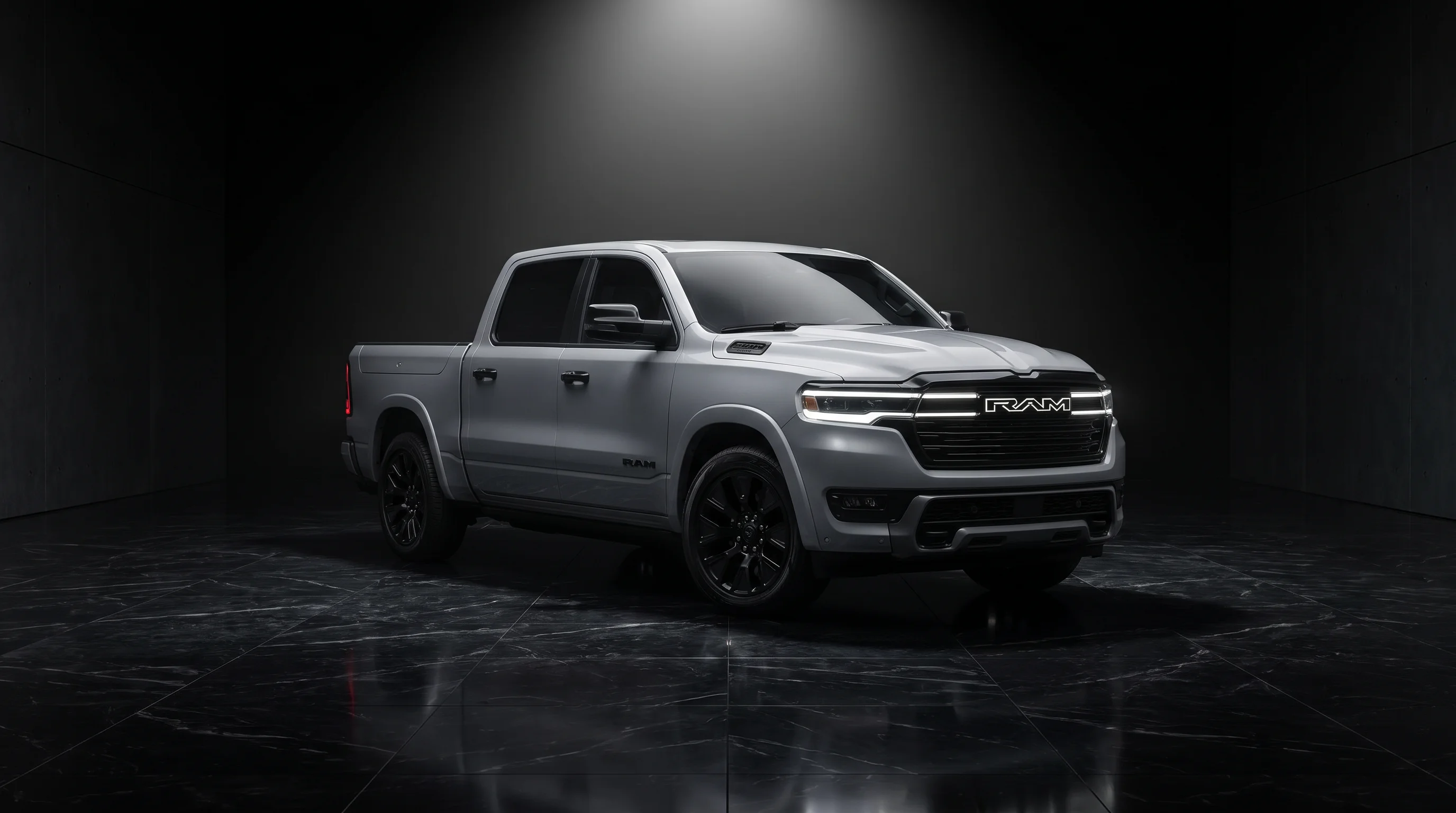
December is the best month to buy a new car if your goal is the lowest transaction price. It is the one month where end-of-month, end-of-quarter, and end-of-year sales targets all land at once, and automakers stack year-end clearance rebates, APR subsidies, and dealer cash on top. If you want a wider selection of colors and trim levels alongside strong discounts, August through October is the better window — that’s when the model-year changeover puts incoming and outgoing inventory on the lot side by side.
But the 2026-to-2027 changeover is not following the usual script, and that changes the math for anyone shopping right now. More on that below.
Cited Source: CARFAX, “5 Best Times to Buy a Car” (carfax.com); U.S. News & World Report, “Best Times to Buy a Car” (cars.usnews.com).
Which Shopping Window Fits Your Priority?
| Shopping Window | Primary Advantage | Best For |
|---|---|---|
| Late Q3 (Aug–Oct) | Peak model-year selection | Balanced selection and discount |
| Late Q4 (Nov–Dec) | Deepest price reductions | Pure bargain hunters |
| Early weekdays | Lower showroom foot traffic | Undivided sales and finance attention |
| Holiday weekends | Event-specific cash bonuses | Stacking promotional incentives |
What Incentive Data Says About Timing
Kelley Blue Book tracks manufacturer incentive spending as a share of average transaction price (ATP). In August 2026, incentives averaged 6.5% of ATP, down from 6.6% in July and 7.2% in August 2025. The average new vehicle transacted at $50,089 in August, the first month of 2026 above $50,000. In Cox Automotive’s third-quarter dealer survey, dealers reported feeling less pressure to lower prices as new-vehicle inventory holds at manageable levels. Discounts are still there — they’re just more restrained than they were a year ago, which makes when you shop matter more, not less.
Why the Day of the Week Matters
Mondays and Tuesdays bring noticeably lighter showroom traffic than weekends. On a quiet weekday, the sales and finance team has time to walk through lease structures, trade-in evaluations, and every factory offer you qualify for. If you plan to drive several body styles or compare powertrains, a weekday visit during late summer or late Q4 is the most productive.
Cited Source: Kelley Blue Book / Cox Automotive, “Kelley Blue Book Report: Average New-Vehicle Transaction Price Moves Back Above $50,000 in August,” September 10, 2026 (coxautoinc.com); Cox Automotive, “Affordability Pressures Continue to Weigh on Dealer Confidence” (Q3 2026 Dealer Sentiment Index), September 8, 2026 (coxautoinc.com); CARFAX, “5 Best Times to Buy a Car” (carfax.com).
When Do Automakers Clear Out Previous Model Year Inventory?
Automakers and dealers clear previous model year inventory from late in the third quarter through the fourth quarter, roughly August through December. Federal law gives manufacturers considerable latitude here: under 49 CFR 565.12, a model year is the year used to designate a discrete vehicle model regardless of the calendar year it was actually built, provided the production period does not exceed 24 months. That’s why 2027 vehicles can reach showrooms well before 2027 arrives.
The transition is a rolling handoff, not an overnight swap. Early units can appear as soon as spring, while volume shipments build through late summer and fall. During that window, automakers add factory customer cash, zero-percent financing, and dealer incentives on outgoing inventory to free up floorplan capacity.
| Transition Phase | Calendar Timeline | Discount Level | Inventory Availability |
|---|---|---|---|
| Early arrival | March – June | Moderate | First units of the new model year |
| Peak changeover | August – October | Strong | Best mix of incoming and outgoing stock |
| Year-end clearance | November – December | Maximum | Limited trims and option packages |
Why the 2027 Changeover Is Different — and What It Means Right Now
The 2027 model year is arriving later than a normal cycle, and that is working in shoppers’ favor. Here is what dealer lots actually looked like at the end of August 2026, according to the CarGurus Intelligence Report:
| Model Year | Share of New-Vehicle Inventory | How That Compares |
|---|---|---|
| 2027 (incoming) | 12.4% | Next-year models ran 22.1%–25.2% at this point in 2023–2025 |
| 2026 (current) | 85% | Highest current-year mix since 2020’s 87% |
| 2025 (prior) | 2.1% | Remaining prior-year stock |
Several causes stack up. High-volume 2027 models including the next-generation Chevrolet Silverado and GMC Sierra are scheduled to launch later in the year. Some automakers are extending the current model year instead — Nissan is selling a 2026.5 Rogue. And last year’s timing skews the comparison, since the 2026 Toyota RAV4 didn’t begin arriving until December 2025. CarGurus notes the transition resembles the 2020–2022 stretch, when the industry was working through assembly shutdowns and chip shortages.
For a shopper, the practical effect is time. Dealers across our brands still hold substantial 2026 inventory that incoming 2027 supply has not crowded out. A 2026 vehicle and a nearly identical 2027 version may be sitting on the same lot, and the outgoing one carries the clearance pressure. It also means the usual advice — “wait for the changeover” — is less useful this year than simply comparing the two model years in front of you on price, incentives, and financing.
Shopping the end of a design cycle, just before a generational redesign, still produces some of the largest reductions available. Outgoing designs may lack the newest displays, but their mechanical packages are thoroughly sorted. Discounts go deeper still on a discontinued model, though early depreciation tends to be steeper.
Cited Source: Electronic Code of Federal Regulations, 49 CFR 565.12 (ecfr.gov); CarGurus Intelligence Report, August 2026 (dealers.cargurus.com); Cars.com, “When Do 2027 Cars Come Out?” (cars.com).
Are There Federal EV Tax Credits Available When Buying an EV in 2027?
No. There are no federal EV tax credits for new electric vehicle acquisitions in 2027. The IRC §30D New Clean Vehicle Credit, the IRC §25E Previously-Owned Clean Vehicle Credit, and the IRC §45W Qualified Commercial Clean Vehicle Credit were all terminated by Public Law 119-21 for any vehicle acquired after September 30, 2025. The IRS confirms no replacement credit has been enacted.
Federal Tax Credits
Sections 30D, 25E, and 45W terminated for vehicles acquired after September 30, 2025.
Factory Cash Subsidies
Direct price reductions applied at the time of purchase.
Lease Residual Support
Lower monthly payments through enhanced lease residuals.
One narrow exception survives: buyers who entered a binding written contract and made a payment on or before September 30, 2025, then took delivery later. The IRS treats acquisition and delivery as separate dates, and only acquisition had to beat the deadline. For a standard 2027 showroom purchase, historical credit amounts such as $7,500 or $4,000 cannot be claimed.
Federal credits are gone, but manufacturer incentives on electrified vehicles remain among the strongest in the market. Kelley Blue Book reported EV incentive spending at 12% of average transaction price in August, down from 12.2% in July and 14.6% a year earlier, but still well above the 6.5% industry average. Instead of waiting for a tax filing, 2027 EV shoppers see the benefit as immediate factory rebates, reduced financing rates, and stronger lease support applied at the time of purchase.
Cited Source: Internal Revenue Service, “Credits for New Clean Vehicles Purchased in 2023 or After” (irs.gov); Public Law 119-21; Kelley Blue Book / Cox Automotive, “Kelley Blue Book Report: Average New-Vehicle Transaction Price Moves Back Above $50,000 in August,” September 10, 2026 (coxautoinc.com).
Is It Better to Buy or Lease a New Car in 2027?
Leasing is the better fit for drivers who want lower monthly payments, coverage under the factory warranty‖ for the full term, and the flexibility to step into a new vehicle every 36 months. Financing a purchase is better for higher-mileage drivers — generally those exceeding 15,000 miles a year — who plan to keep the vehicle past five years and want to build equity.
Choose Leasing If You Want
- Lower initial monthly payments
- Continuous technology upgrades
- Coverage under factory warranty‖ for the term
- Protection from resale-value drops
Choose Buying If You Want
- Unlimited annual mileage
- Long-term equity after payoff
- Freedom to customize wheels and accessories
- No lease-end wear-and-tear inspections
Leasing hedges against technological obsolescence. As battery chemistries, charging architectures, and driver-assistance systems¶ advance year over year, a lease lets you hand the vehicle back at term-end without absorbing an unexpected resale decline.
Financing makes sense when long-term ownership value outweighs minimizing the monthly payment. Once a 60- or 72-month loan is retired, the vehicle becomes an unencumbered asset and the payments stop. Buyers who haul heavy loads§, add aftermarket towing equipment, or run high annual mileage also avoid the excess wear and mileage charges that apply at lease-end.
One Detail Most Lease Comparisons Get Wrong: Warranty Length Varies by Brand
A standard 36-month lease is often described as matching “the” 3-year/36,000-mile factory warranty. That’s true for some brands and wrong for others — and across our brands, the difference is significant. If you’re weighing a lease term against factory coverage, start here‖:
| Bumper-to-Bumper | Powertrain | OREMOR Brands |
|---|---|---|
| 5 yr / 60,000 mi | 10 yr / 100,000 mi | Hyundai |
| 4 yr / 50,000 mi | 6 yr / 70,000 mi | Lexus |
| 4 yr / 50,000 mi | 4 yr / 50,000 mi | BMW, Mercedes-Benz |
| 3 yr / 36,000 mi | 10 yr / 100,000 mi | Ram (2026 model year forward, gas engines) |
| 3 yr / 36,000 mi | 5 yr / 60,000 mi | Chevrolet, Chrysler, Dodge, GMC, Jeep, Nissan, Toyota |
Cited Source: GMC, “Important Information” (gmc.com); GM Fleet, “Chevrolet, Cadillac, GMC, and Buick Warranty” (gmfleet.com); U.S. News & World Report, “Car Brands With the Best Warranty Coverage in 2026” (cars.usnews.com); Cars.com, “Which Vehicles Have the Best Warranty Coverage?” (cars.com).
‖ Warranty: This information is provided for general educational purposes only and does not constitute legal advice. Warranty coverage depends on the specific terms of your vehicle’s warranty agreement. Consult your owner’s manual or a qualified legal professional for guidance on your individual situation.
§ Towing/Payload: Maximum towing and payload capacity figures are based on properly equipped vehicles and vary by configuration. Do not exceed any weight rating. See your owner’s manual and the vehicle’s door-jamb label for specific capacities.
¶ Driver Assistance / Safety: Driver-assist and safety systems are supplemental aids and are not a substitute for safe, attentive driving. Their effectiveness depends on weather, road, and traffic conditions and other factors. Always obey traffic laws and stay attentive to the road. See your owner’s manual for system details and limitations.
Which Specifications Should You Compare Between a 2026 and 2027 Model?
When the two model years sit side by side on the lot, six specifications tell you whether the newer one is worth the price difference: engine output, transmission type, fuel economy‡, drivetrain, towing capacity§, and cargo volume.
| Specification | Measurement | Real-World Impact |
|---|---|---|
| Powertrain and output | Horsepower and torque (lb-ft) | Merging, passing, grade climbing |
| Transmission | Multi-speed automatic, CVT, or single-speed EV | Shift behavior and RPM management |
| Fuel economy‡ | EPA-estimated MPG or MPGe | Operating cost and range between fills |
| Drivetrain | FWD, RWD, AWD, or 4WD | Traction, stability, off-road capability |
| Towing and payload§ | Maximum tow rating (lb) | Trailers, boats, and utility equipment |
| Cargo capacity | Cargo volume (cubic feet) | Luggage, gear, and cargo behind each row |
Drivetrain choice changes how a vehicle behaves. All-wheel drive monitors grip continuously and shifts torque between axles when a wheel slips, which suits on-road and wet conditions. Four-wheel drive uses a transfer case and typically adds low-range gearing, making it stronger for serious off-road use and heavy towing§. Read cargo figures closely too — seats-upright versus seats-folded tells you whether an SUV actually swallows strollers or camping gear without squeezing legroom.
Cited Source: Kelley Blue Book, “AWD vs. 4WD: Which Is Better?” (kbb.com); CarMax, “AWD vs. 4WD: What’s the difference?” (carmax.com).
‡ Fuel Economy: EPA-estimated fuel economy figures are for comparison purposes only. Your actual mileage will vary depending on driving conditions, how you drive and maintain your vehicle, battery age/condition, and other factors.
§ Towing/Payload: Maximum towing and payload capacity figures are based on properly equipped vehicles and vary by configuration. Do not exceed any weight rating. See your owner’s manual and the vehicle’s door-jamb label for specific capacities.
How Do You Estimate the Full Out-the-Door Price in California?
Your out-the-door price is the vehicle selling price plus sales tax, DMV registration fees, and the dealer documentation fee, minus factory rebates and net trade-in equity. Looking only at MSRP† leaves out mandatory costs that change the final contract total — and California’s tax rules differ from most states in ways that catch buyers off guard.
The Six-Step Calculation
- Start with MSRP†, including factory-installed option packages
- Subtract negotiated dealer discounts — these reduce the California taxable amount
- Apply your local sales tax rate to that figure
- Add DMV title, registration, and license fees
- Add the dealer documentation fee — capped at $85 in California
- Subtract factory rebates and net trade-in equity from the cash total
What Actually Lowers Your California Tax Bill
Most national car-buying advice gets this wrong. Under California Department of Tax and Fee Administration rules, only one of these three reductions lowers the amount you are taxed on:
| Type of Reduction | Lowers Your Taxable Price? | Lowers Your Cash Cost? |
|---|---|---|
| Negotiated dealer discount | Yes | Yes |
| Manufacturer rebate | No — tax is calculated on the pre-rebate price | Yes |
| Trade-in equity | No — California taxes the full sale price | Yes |
The practical consequence: if you trade a $10,000 vehicle against a $35,000 purchase, you still owe California sales tax on $35,000, not $25,000. Your trade-in reduces your loan principal and down payment — it just doesn’t reduce your tax bill here. The same logic applies to a factory rebate: a $2,000 rebate lowers what you pay out of pocket, but the tax is still assessed on the pre-rebate amount.
When you’re ready to run real numbers, you can value your trade or explore financing options before you visit.
Cited Source: California Department of Tax and Fee Administration, Sales and Use Tax Annotation 295.0948, “Manufacturer’s Rebate vs. Dealer’s Incentive or Allowance” (cdtfa.ca.gov); CDTFA, “Tax Guide for Motor Vehicle Dealers” (cdtfa.ca.gov).
† MSRP: Manufacturer’s Suggested Retail Price (MSRP) for new vehicles includes manufacturer and distributor options and delivery, process and handling fees, which may be subject to change at any time. MSRP excludes taxes, title, license and dealer installed options, accessories, fees and charges. MSRP is not the dealer advertised price. Dealer price will vary. The dealer sets the final price.
Key Answers for 2027 Car Shoppers
What documents should I bring to complete a purchase in one visit?
| Document | When You Need It |
|---|---|
| Valid driver’s license | Every purchase |
| Proof of insurance showing active coverage | Every purchase |
| Recent proof of income, such as a pay stub | Every purchase |
| Proof of residence, such as a utility bill | Every purchase |
| Vehicle title or lienholder payoff information | If trading in |
| Current vehicle registration | If trading in |
| All original key fobs | If trading in |
Does buying on Black Friday beat a regular weekend?
Yes, though not for the reason it’s usually given. Black Friday sits at the end of the fall model-year sell-off rather than at the peak of the changeover, and it lands close enough to year-end that dealers are already working against annual targets. Manufacturers layer holiday cash, zero-percent offers, and lease cash on top of existing incentives, which makes it a genuinely stronger window than a standard mid-year weekend — but the deepest pricing of the year still arrives in late December.
Cited Source: U.S. News & World Report, “Best Times to Buy a Car” (cars.usnews.com).
How does trading in a vehicle with an existing loan affect my timing?
You’ll need an official 10-day payoff statement from your lender — a document stating the amount required to close the loan in full, including interest and fees, over the next 10 days. If your vehicle’s market value exceeds the loan balance, that positive equity reduces your purchase price and down payment. If the payoff exceeds market value, the difference is paid out of pocket or rolled into the new loan. Keep in mind that in California, trade-in equity does not reduce your sales tax.
Cited Source: OneMain Financial, “What is a 10-Day Payoff, and How Does it Work?” (onemainfinancial.com).
Should I buy the first model year of a redesigned vehicle or wait?
Buying year one gets you the newest technology, updated safety systems¶, and fresh styling immediately. Consumer Reports has found that vehicles tend to be least reliable in the first year of a redesign and most reliable by the final year of a model run, typically five to seven years in, once the bugs have been worked out. Its analysis also found that 45% of new or redesigned vehicles carried below-average predicted reliability. If long-term mechanical reliability is your priority, later in the cycle is the safer buy.
Cited Source: Consumer Reports, “To Get the Most Reliable New Car, It Pays to Wait” (consumerreports.org).
¶ Driver Assistance / Safety: Driver-assist and safety systems are supplemental aids and are not a substitute for safe, attentive driving. Their effectiveness depends on weather, road, and traffic conditions and other factors. Always obey traffic laws and stay attentive to the road. See your owner’s manual for system details and limitations.
What’s the most effective way to lock in pricing before you arrive?
Request a written itemized quote covering MSRP†, active factory rebates, dealer discounts, estimated tax, and administrative fees. Reviewing it in advance lets you verify every incentive, confirm financing terms, and settle your trade-in evaluation before making the trip.
† MSRP: Manufacturer’s Suggested Retail Price (MSRP) for new vehicles includes manufacturer and distributor options and delivery, process and handling fees, which may be subject to change at any time. MSRP excludes taxes, title, license and dealer installed options, accessories, fees and charges. MSRP is not the dealer advertised price. Dealer price will vary. The dealer sets the final price.
Whether you’re timing a year-end purchase, comparing a 2026 against its 2027 replacement, or valuing a trade, our team across 18 dealerships in Southern California and Texas is ready to help.
Disclaimers
† MSRP: Manufacturer’s Suggested Retail Price (MSRP) for new vehicles includes manufacturer and distributor options and delivery, process and handling fees, which may be subject to change at any time. MSRP excludes taxes, title, license and dealer installed options, accessories, fees and charges. MSRP is not the dealer advertised price. Dealer price will vary. The dealer sets the final price.
‡ Fuel Economy: EPA-estimated fuel economy figures are for comparison purposes only. Your actual mileage will vary depending on driving conditions, how you drive and maintain your vehicle, battery age/condition, and other factors.
§ Towing/Payload: Maximum towing and payload capacity figures are based on properly equipped vehicles and vary by configuration. Do not exceed any weight rating. See your owner’s manual and the vehicle’s door-jamb label for specific capacities.
¶ Driver Assistance / Safety: Driver-assist and safety systems are supplemental aids and are not a substitute for safe, attentive driving. Their effectiveness depends on weather, road, and traffic conditions and other factors. Always obey traffic laws and stay attentive to the road. See your owner’s manual for system details and limitations.
‖ Warranty: This information is provided for general educational purposes only and does not constitute legal advice. Warranty coverage depends on the specific terms of your vehicle’s warranty agreement. Consult your owner’s manual or a qualified legal professional for guidance on your individual situation.






0 comment(s) so far on When Is the Best Time to Buy a New Car in 2027?