

Does a Cabin Air Filter Protect Against Wildfire Smoke?
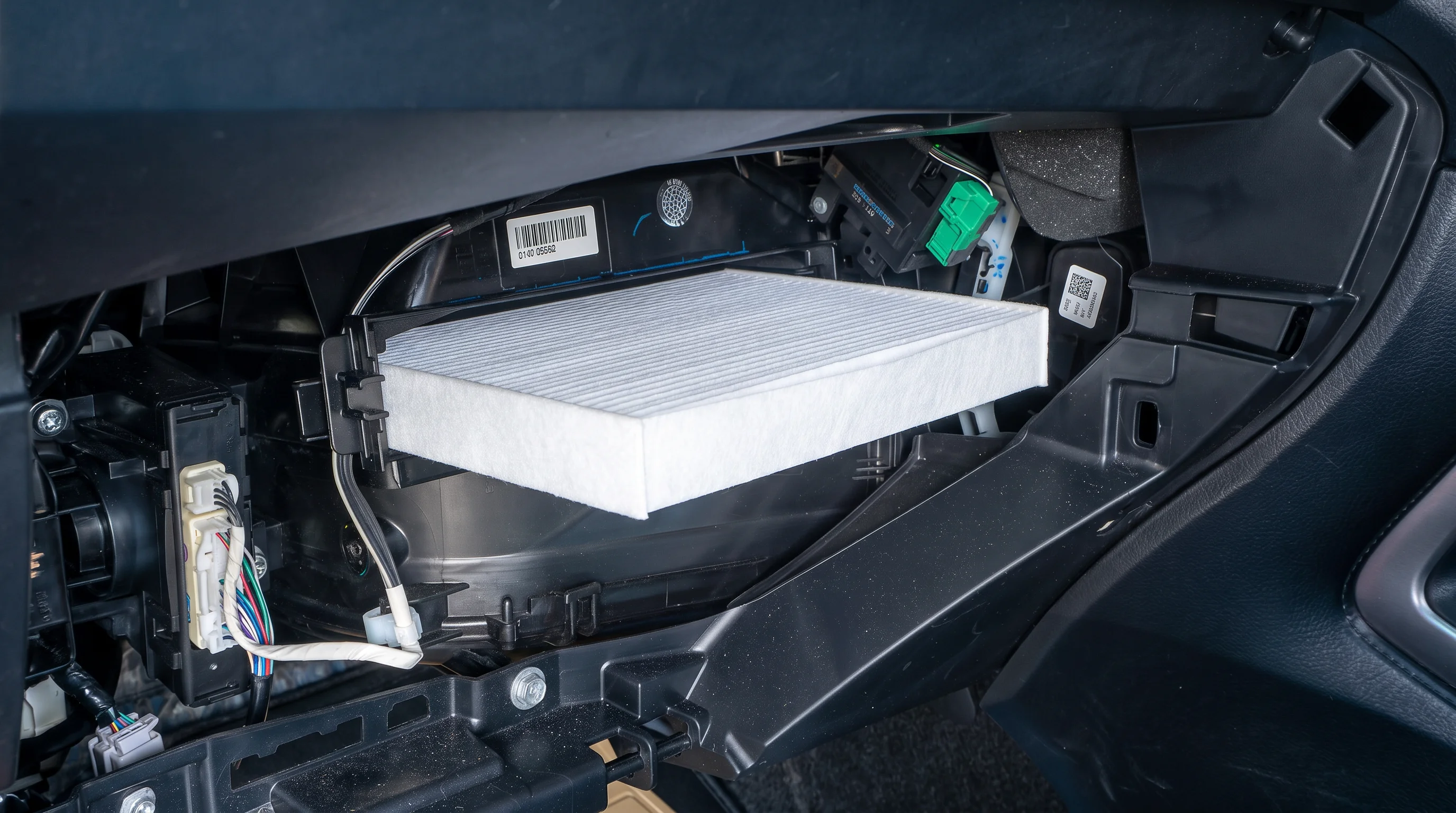
Yes. A cabin air filter helps protect against wildfire smoke by trapping particles before outside air reaches the cabin, but how much it captures depends on the filter media. According to AAA, standard cabin air filters are about 98% efficient at trapping particulates in the 5–100 micron range, while smaller particles such as soot and smoke can still pass through. HEPA cabin filters can trap even finer particles. Because a vehicle cabin isn’t airtight, the best protection combines a clean, efficient filter with the right climate-control settings.
Your cabin air filter cleans the outside air that enters the passenger compartment through the heating, ventilation, and air conditioning (HVAC) system. The U.S. Environmental Protection Agency advises setting your air conditioning to recirculate when smoke levels are high to reduce smoke exposure.
If your filter may be loaded with soot, or you notice a persistent burning smell inside your vehicle, an OREMOR service department can inspect your climate system and install the correct replacement filter.
How Small Are Wildfire Smoke Particles?
Wildfire smoke contains fine particulate matter, known as PM2.5: particles 2.5 micrometers in diameter and smaller. The EPA notes that the average human hair is about 70 micrometers across, roughly 30 times larger than the largest fine particle, and identifies PM2.5 as the particle size that poses the greatest risk to health. Smoke can also reach communities far from the fire itself.
During smoke events in the Inland Empire, a standard filter will keep heavier debris out of your HVAC system, but much of the fine smoke can pass through unless your vehicle uses high-efficiency filter media.
Here’s how particle size lines up with cabin filtration, based on data from the EPA and AAA:
| Particle Category | Size | How Cabin Filters Handle It |
|---|---|---|
| Coarse inhalable particles (PM10) | 10 micrometers and smaller | Standard filters are about 98% efficient in the 5–100 micron range |
| Fine particles (PM2.5) | 2.5 micrometers and smaller | Smaller particles, including soot and smoke, can pass through standard filters |
| HEPA test particle size | 0.3 micrometers | HEPA filters are rated to capture at least 99.97% at this size |
Should You Use Recirculation Mode During Wildfire Smoke?
Yes. As one dealership service manager explained to CBS News Detroit, pressing the recirculate button stops the vehicle from bringing fresh air in from outside and keeps cycling cabin air through the cabin air filter instead. The EPA recommends setting the air conditioner to recirculate when smoke levels are high, and the California Air Resources Board advises keeping windows rolled up with the air conditioner set to recirculate during evacuations.
To set your climate control for smoke protection, following EPA public health guidance:
- Close all windows, vents, and the sunroof.
- Turn on the air conditioning.
- Press the recirculation button, usually shown as a car icon with a looping arrow.
If the windshield fogs, visibility comes first: use defrost even though it pulls in outside air, then return to recirculation once the glass clears. When air quality improves, the EPA advises turning off recirculate mode and opening the windows.
| Setting | When to Use It |
|---|---|
| Air conditioning on recirculate, windows closed | Smoke levels are high |
| Defrost (draws in outside air) | Only when the windshield fogs; return to recirculate once it clears |
| Recirculate off, windows open | Air quality has improved |
The information on this page is provided for general informational purposes only and reflects manufacturer specifications believed accurate at the time of publication. Specifications, capacities, part numbers, and service recommendations are subject to change and may vary by model year, trim, and configuration. Always confirm the correct cabin air filter type and replacement interval against your vehicle’s owner’s manual before servicing. Consult a certified technician for service specific to your vehicle.
Standard vs. HEPA vs. HEPA + Carbon Cabin Air Filters
A combination filter with high-efficiency particle media and activated carbon offers the broadest wildfire smoke protection, because HEPA media stops soot, while only activated carbon adsorbs gases and odors.
| Filter Type | Particle Filtration | Odor and Gas Absorption | Media |
|---|---|---|---|
| Standard particulate | About 98% efficient in the 5–100 micron range; smaller particles such as soot and smoke can pass through | No | Pleated natural and/or synthetic fibers |
| HEPA | Rated to capture at least 99.97% of particles at 0.3 microns | Only if carbon-layered | High-efficiency particulate media |
| HEPA + activated carbon | HEPA-level particle capture | Yes; carbon adsorbs odors and gases | High-efficiency media with an activated carbon layer |
According to AAA, carbon-treated cabin filters help remove a range of odors, including exhaust gas smells. The EPA explains that HEPA filters are rated to remove at least 99.97% of airborne particles at 0.3 microns. Before upgrading, confirm with your owner’s manual or a service advisor which filter types fit your vehicle, since higher-efficiency media creates more airflow resistance.
The information on this page is provided for general informational purposes only and reflects manufacturer specifications believed accurate at the time of publication. Specifications, capacities, part numbers, and service recommendations are subject to change and may vary by model year, trim, and configuration. Always confirm the correct cabin air filter type and replacement interval against your vehicle’s owner’s manual before servicing. Consult a certified technician for service specific to your vehicle.
Can Wildfire Smoke Ruin a New Cabin Air Filter?
Prolonged smoky conditions can clog a cabin air filter more quickly than normal, reducing its effectiveness and letting smoke odors linger inside the vehicle. An activated carbon layer also adsorbs odors until it saturates, then stops.
Signs your cabin air filter needs attention, according to AAA:
Persistent Odors
A smoky, musty, or stale smell from the vents.
Reduced Airflow
Noticeably less air from the vents.
Strained Fan
A restricted filter places a greater load on the ventilation fan.
Slow Defogging
Windows that fog up easily and are hard to defrost.
The fix is replacement. AAA recommends following your vehicle’s factory interval and considering an earlier replacement if you notice reduced airflow or persistent odors.
The information on this page is provided for general informational purposes only and reflects manufacturer specifications believed accurate at the time of publication. Specifications, capacities, part numbers, and service recommendations are subject to change and may vary by model year, trim, and configuration. Always confirm the correct cabin air filter type and replacement interval against your vehicle’s owner’s manual before servicing. Consult a certified technician for service specific to your vehicle.
Common Questions About Cabin Air Filtration During Wildfire Season
What filter rating do you need to stop fine wildfire smoke?
Look for high-efficiency or HEPA-rated cabin media rather than a MERV number. MERV ratings report a filter’s ability to capture particles between 0.3 and 10 microns, and CARB recommends MERV 13 or higher for home HVAC filters during smoke events. Cabin air filters are tested under different automotive standards, so MERV ratings don’t convert directly to cabin filter efficiency. HEPA filters are rated to capture at least 99.97% of particles at 0.3 microns.
Can running the heater bring wildfire smoke into the cabin?
Yes, if your climate control is set to fresh-air intake. The heater moves air through the same HVAC system and cabin filter as the air conditioning, so keep recirculation engaged to avoid drawing outside air in. Some automatic climate control settings can bring in outside air on their own to manage humidity or prevent window fogging, so check the intake setting.
Will an upgraded cabin air filter reduce airflow?
Higher-efficiency filters create more airflow resistance than basic filters, which is why it’s important to choose a filter designed for your vehicle. A heavily loaded filter of any type also restricts airflow, and AAA notes that a restricted filter places a greater load on the ventilation fan.
Does recirculation mode completely seal the cabin from outside air?
No. A vehicle cabin is not completely airtight, so some outside air still enters even with recirculation on. Pairing recirculation with a clean, efficient cabin filter helps remove particles that seep in.
How often should you inspect your cabin air filter after driving through smoke?
Inspect your cabin air filter after driving through heavy smoke or a long stretch of air quality alerts. AAA says factory replacement intervals range from 15,000 to 30,000 miles, but the filter may need replacing more often where dust and airborne debris levels are high, and manufacturer schedules vary. Our Ram maintenance schedule guide, for example, lists cabin air filter replacement every 12,000 miles. If you notice reduced airflow or a smoky smell inside the vehicle, have the cabin air filter checked regardless of mileage.
The information on this page is provided for general informational purposes only and reflects manufacturer specifications believed accurate at the time of publication. Specifications, capacities, part numbers, and service recommendations are subject to change and may vary by model year, trim, and configuration. Always confirm the correct cabin air filter type and replacement interval against your vehicle’s owner’s manual before servicing. Consult a certified technician for service specific to your vehicle.
Protect Your Vehicle’s Cabin Air Quality at OREMOR Automotive Group
Clean cabin air during wildfire season comes down to two things: a fresh, correctly installed filter matched to your vehicle, and smart climate-control habits. Every OREMOR service department is staffed by factory-trained, brand-certified technicians who can inspect your cabin air filter, check climate-control airflow, and install a genuine OEM replacement filter, whether you drive a truck, SUV, sedan, or luxury model. Learn more about OREMOR service.
While you’re scheduling, it’s also a good time to make sure your tires are ready for the road. See the difference between tire rotation, wheel balancing, and alignment.
Disclaimers
Service Information:
The information on this page is provided for general informational purposes only and reflects manufacturer specifications believed accurate at the time of publication. Specifications, capacities, part numbers, and service recommendations are subject to change and may vary by model year, trim, and configuration. Always confirm the correct cabin air filter type and replacement interval against your vehicle’s owner’s manual before servicing. Consult a certified technician for service specific to your vehicle.





0 comment(s) so far on Does a Cabin Air Filter Protect Against Wildfire Smoke?