

California EV & PHEV Incentives in 2026 (After the Federal Credit Ended)
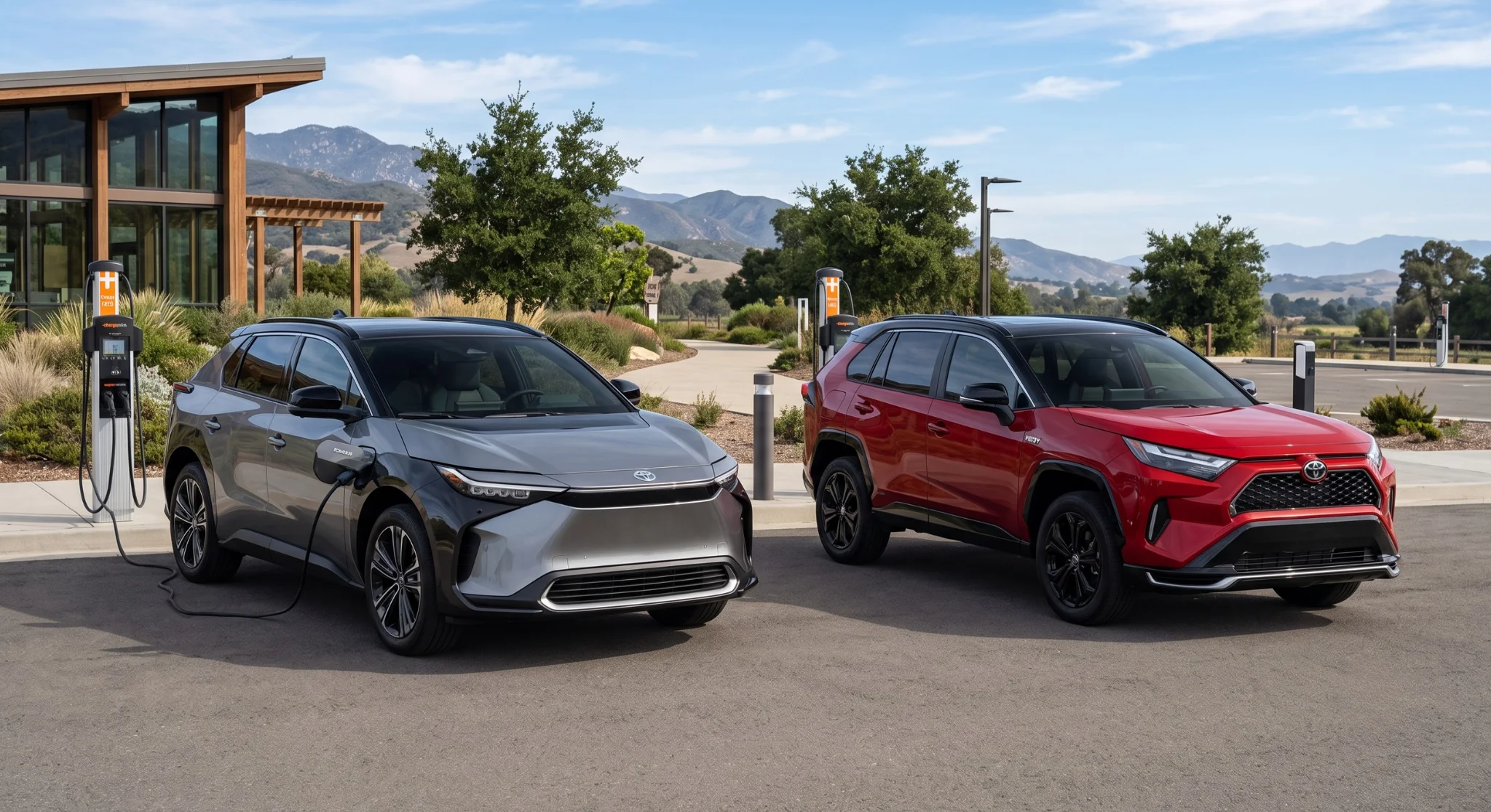
The rules for saving on an electric or plug-in hybrid vehicle in California have changed substantially in 2026. The federal tax credit that shaped EV shopping for years has ended, and the state’s own programs have shifted toward point-of-sale rebates and income-qualified assistance. This guide breaks down what’s actually available right now, who qualifies, and how the pieces fit together — so you can plan a purchase around the incentives that still exist.
At OREMOR Automotive Group, our team across our Southern California and Texas dealerships can help you match the right electric or plug-in hybrid to the programs you may qualify for. Stop by our Ontario location at 1377 Kettering Dr., Ontario, CA 91761, or call (909) 323-0539 to talk through your options.
The Federal Clean Vehicle Credit: What Ended and When
The federal clean vehicle tax credits are no longer available for new purchases. Under Public Law 119-21, signed July 4, 2025, the credits under IRC Sections 30D (new), 25E (used), and 45W (commercial) ended for vehicles acquired after September 30, 2025.
There is one narrow exception. Buyers who signed a binding written contract and made a payment on or before September 30, 2025 may still claim the credit when they take possession — even in 2026. For everyone shopping today, though, these federal credits no longer apply, which makes state programs and competitive dealer pricing the primary paths to savings. This reflects current guidance from the Internal Revenue Service.
| Credit | Applies to | Status as of 2026 |
|---|---|---|
| IRC 30D | New clean vehicles | Ended for vehicles acquired after 9/30/2025 |
| IRC 25E | Used clean vehicles | Ended for vehicles acquired after 9/30/2025 |
| IRC 45W | Commercial clean vehicles | Ended for vehicles acquired after 9/30/2025 |
California’s New MyFirstEV Point-of-Sale Rebate
California introduced the MyFirstEV program under SB 168, signed into law on July 13, 2026, with a launch planned for later in summer 2026. Unlike a tax credit you claim months later, MyFirstEV is designed as an instant rebate applied right at the dealership.
A key point about eligibility: MyFirstEV has no income cap. It’s open to any Californian purchasing or leasing their first zero-emission vehicle, with price caps — rather than income — determining which vehicles qualify. Note that the rebate applies to battery electric vehicles (zero-emission), not plug-in hybrids.
Two limits worth flagging before you shop: First, MyFirstEV applies only to battery electric vehicles — plug-in hybrids are not eligible, so PHEV models like the Jeep Wrangler 4xe and Grand Cherokee 4xe do not qualify. Second, the rebate is delivered through participating automakers only. The confirmed participants include Toyota, Hyundai, Nissan, and General Motors (Chevrolet), but do not include Stellantis (Jeep/CDJR), Mercedes-Benz, or BMW. If you’re considering a vehicle from a brand or of a type not covered here, ask our team which current incentives may apply instead.
| Feature | New EV | Used EV |
|---|---|---|
| Rebate amount | $3,500 | $1,750 |
| Vehicle price cap | MSRP* up to $50,000 | Sale price up to $25,000 |
| How it’s applied | Point-of-sale (instant) | Point-of-sale (instant) |
| Eligibility | First-time ZEV buyer, any income | First-time ZEV buyer, any income |
Worth knowing before you count on it: As of this writing, the program has been signed into law and the state has secured 13 participating automakers, but the California Air Resources Board is still finalizing when funding will be available and which specific vehicles will qualify before rebates can be issued. The confirmed participating automakers include several brands OREMOR carries — among them Toyota, Hyundai, Nissan, and General Motors (Chevrolet). Check current program status before planning a purchase around it. Program details are drawn from the Office of the Governor of California.
*Manufacturer’s Suggested Retail Price (MSRP) for new vehicles includes manufacturer and distributor options and delivery, process and handling fees, which may be subject to change at any time. MSRP excludes taxes, title, license and dealer installed options, accessories, fees and charges. MSRP is not the dealer advertised price. Dealer price will vary. The dealer sets the final price.
Clean Cars 4 All and Income-Qualified Assistance
For lower-income households, California’s scrap-and-replace programs remain among the most substantial tools available — and they cover plug-in hybrids as well as full EVs.
Clean Cars 4 All (CC4A)
CC4A pays eligible residents to retire an older, higher-polluting vehicle and replace it with a cleaner one. The program runs through five regional air districts — including South Coast AQMD, which covers the Inland Empire and the Ontario area.
| Income eligibility | PHEV grant | ZEV grant | Charging support |
|---|---|---|---|
| ≤300% Federal Poverty Level | Up to $9,500 | Up to $10,000 | Up to $2,000 |
| ≤300% FPL, Disadvantaged Community | Up to $11,500 | Up to $12,000 | Up to $2,000 |
The single income threshold is household income at or below 300% of the Federal Poverty Level. The higher grant amounts are tied to living in a designated Disadvantaged Community and to choosing a zero-emission vehicle — not to a separate income sub-tier. Replacement vehicles can be new or used PHEVs or ZEVs, and buyers can alternatively choose mobility options like an e-bike or transit voucher. Grant amounts and eligibility are published by the California Air Resources Board.
Driving Clean Assistance Program (DCAP)
For residents statewide, DCAP offers up to $12,000 toward a new or used EV or plug-in hybrid, plus up to $2,000 for home or public charging, along with financial coaching and access to fair financing. It’s administered in partnership with CARB.
Important availability note: DCAP has seen extraordinary demand. Its financing-assistance pathway has closed to certain applicant tiers, and funding in several regions — including major metro areas — has been exhausted or nearly exhausted. Confirm current availability before applying. See the California Air Resources Board for current DCAP status.
Incentive programs, eligibility criteria, rebate amounts, and availability are set by third parties (federal and state agencies, air districts, and utilities), are subject to change, and may close when funding is exhausted. Program details in this article are provided for general informational purposes only and do not constitute legal, tax, or financial advice. Confirm current program status and your individual eligibility with the administering agency before making a purchase decision.
Home Charging Rebates and EV Rate Plans
Setting up home charging is one of the biggest quality-of-life upgrades for a new EV owner. If you’re a Southern California Edison (SCE) customer, two programs are worth understanding.
Charge Ready Home Panel-Upgrade Rebate
SCE’s Charge Ready Home program offers rebates to upgrade a home’s electrical panel and support a 240-volt Level 2 charger. The amount depends on which of two eligibility paths you qualify for: the income-qualified path covers up to $4,200 (for households earning under 80% of area median income, or enrolled in a qualifying public-assistance program), while the geographic path covers up to $2,100 (for residents of a designated disadvantaged community). Details are available from Southern California Edison.
TOU-D-PRIME EV Rate Plan
SCE’s TOU-D-PRIME rate plan is built for households with EV charging, solar, or battery storage. It trades the standard baseline credit and a daily charge for significantly lower off-peak rates, rewarding drivers who charge overnight or during low-demand hours. Because utility rates change, check SCE directly for current TOU-D-PRIME pricing before enrolling.
| Program | What it does | Key condition |
|---|---|---|
| Charge Ready Home | Panel-upgrade rebate: up to $4,200 (income-qualified) or up to $2,100 (geographic) | Income- or geography-qualified |
| TOU-D-PRIME rate | Lower off-peak charging rates | Best for overnight charging; no baseline credit |
Utility rebate amounts, rate plans, and eligibility requirements are set by the utility, are subject to change, and may close when funding is exhausted. Confirm current program terms directly with Southern California Edison before enrolling.
HOV Lane Access: What Changed
One long-standing EV perk is gone. California’s Clean Air Vehicle (CAV) decal program, which let single-occupant clean vehicles use carpool (HOV) lanes, sunset on September 30, 2025, and the state is no longer issuing new decals. New EV and PHEV purchases no longer come with solo carpool-lane access, per the California DMV.
Quick Answers Before You Visit
What documents should I bring to apply for income-qualified state rebates?
For income-qualified programs, bring your most recent federal tax return, proof of California residency, and recent pay stubs. Having these ready lets our team help verify eligibility efficiently.
Can I still get a Clean Air Decal for HOV lane access?
No. California’s Clean Air Vehicle decal program ended September 30, 2025. The state is no longer issuing new decals, so new EV purchases don’t receive solo carpool-lane privileges.
How does the MyFirstEV rebate work if I lease instead of buy?
MyFirstEV is designed to apply at the point of sale, which can reduce a lease’s capitalized cost the same way it lowers a financed purchase price. Because the program is still being finalized, confirm current lease terms when it launches.
Do I need a Level 2 charger, or can I use a standard outlet?
You can charge from a standard 120-volt outlet, but it only adds roughly 3 to 5 miles of EPA-estimated range per hour. A 240-volt Level 2 charger is strongly recommended for overnight charging and can replenish most batteries in a matter of hours.
What’s the typical battery warranty on a new EV?
Coverage varies by manufacturer, but new EV batteries are commonly covered for 8 to 10 years or 100,000 miles, protecting against excessive capacity loss. Check the specific warranty for the brand and model you’re considering.
California adds its own protections through the Advanced Clean Cars II rules. For 2026 through 2030 model-year EVs certified for sale in the state, manufacturers must warrant the battery to hold at least 70% of its state of health for 8 years or 100,000 miles. Separately, for 2026 through 2029 model-year EVs, manufacturers must design the vehicle to retain at least 70% of its certified EPA-estimated range for 10 years or 150,000 miles. Those thresholds tighten for later model years. Details are published by the California Air Resources Board.
EPA-estimated fuel economy figures are for comparison purposes only. Your actual mileage will vary depending on driving conditions, how you drive and maintain your vehicle, battery age/condition, and other factors.
This information is provided for general educational purposes only and does not constitute legal advice. Warranty coverage depends on the specific terms of your vehicle’s warranty agreement. Consult your owner’s manual or a qualified legal professional for guidance on your individual situation.
Start Your EV Journey with OREMOR
Going electric in 2026 is about aligning the right vehicle with the state rebates, utility programs, and financing that fit your situation. With EV and plug-in hybrid options across brands like Chevrolet, Hyundai, Nissan, Toyota, and Jeep, our team can help you find a fit and walk through the incentives you may qualify for.
Explore our current lineup of electric and plug-in hybrid vehicles, or reach out and we’ll help you map out your options.
Disclaimers
MSRP: Manufacturer’s Suggested Retail Price (MSRP) for new vehicles includes manufacturer and distributor options and delivery, process and handling fees, which may be subject to change at any time. MSRP excludes taxes, title, license and dealer installed options, accessories, fees and charges. MSRP is not the dealer advertised price. Dealer price will vary. The dealer sets the final price.
Incentive Programs: Incentive programs, eligibility criteria, rebate amounts, and availability are set by third parties (federal and state agencies, air districts, and utilities), are subject to change, and may close when funding is exhausted. Program details in this article are provided for general informational purposes only and do not constitute legal, tax, or financial advice. Confirm current program status and your individual eligibility with the administering agency before making a purchase decision.
Utility Programs and Rate Plans: Utility rebate amounts, rate plans, and eligibility requirements are set by the utility, are subject to change, and may close when funding is exhausted. Confirm current program terms directly with Southern California Edison before enrolling.
EPA-Estimated Figures: EPA-estimated fuel economy figures are for comparison purposes only. Your actual mileage will vary depending on driving conditions, how you drive and maintain your vehicle, battery age/condition, and other factors.
Legal and Warranty Information: This information is provided for general educational purposes only and does not constitute legal advice. Warranty coverage depends on the specific terms of your vehicle’s warranty agreement. Consult your owner’s manual or a qualified legal professional for guidance on your individual situation.




0 comment(s) so far on California EV & PHEV Incentives in 2026 (After the Federal Credit Ended)