

Home EV Charging in California: Level 1 vs. Level 2 and Utility Rebates
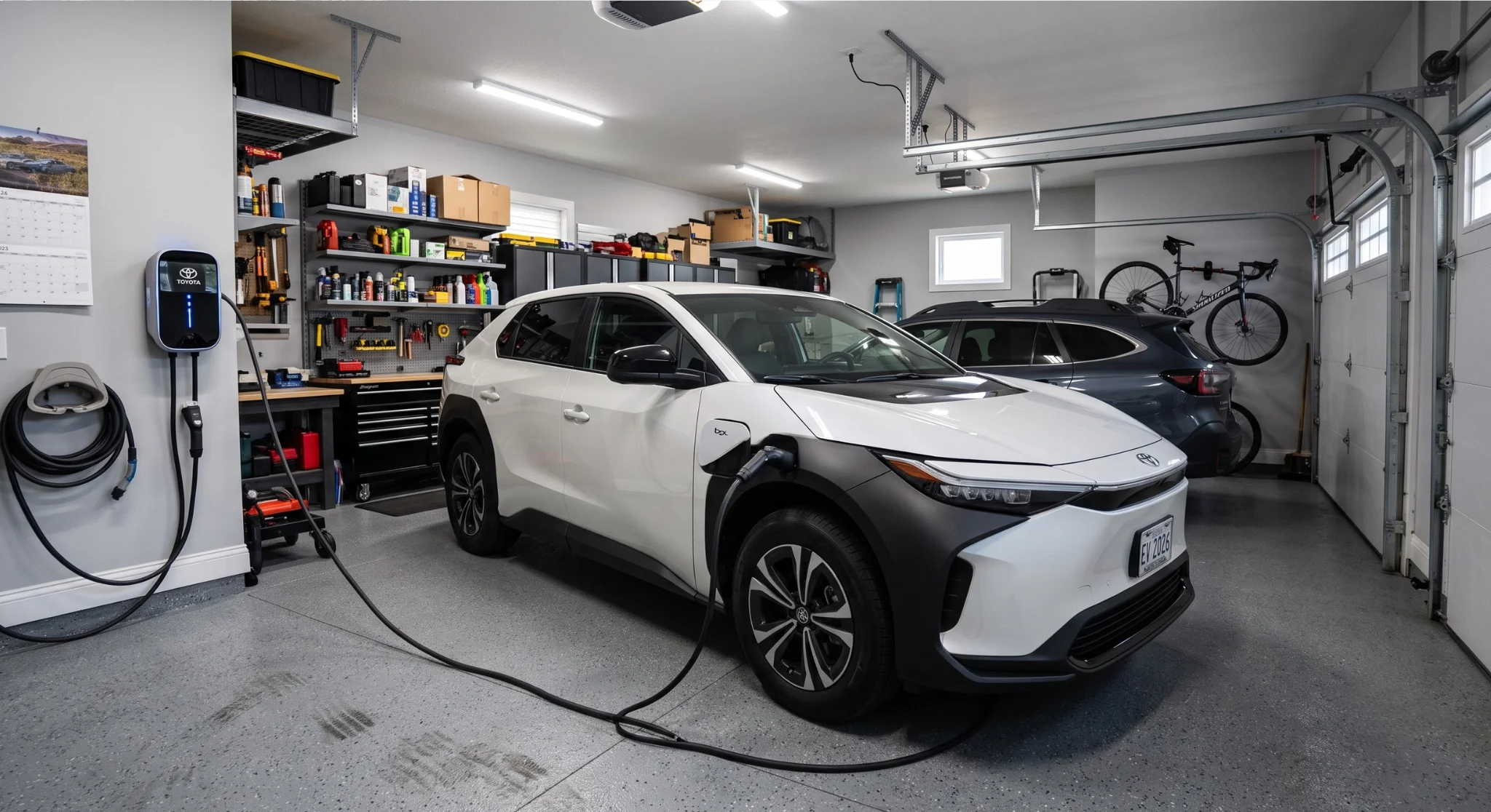
First-time EV shoppers almost always ask the same question before they buy. How fast will this thing actually charge at home? The answer comes down to the electrical delivery system. Level 1 charging runs on a standard 120-volt household outlet. It is the same kind of outlet that powers a lamp or a phone charger. It delivers roughly 1 to 2 kW. That works out to about 3 to 5 miles of range per hour, according to the U.S. Department of Transportation. Level 1 works as a starting point. But it asks for patience if your commute is long.
Level 2 charging uses a 240-volt circuit. That is the kind of circuit that feeds a large household appliance. A standard Level 2 home charger of about 7 kW adds roughly 20 to 30 miles of range per hour. Step up to a 48-amp unit of about 11.5 kW. That climbs to roughly 35 to 40 miles per hour. You can recover a full day of driving overnight instead of over several days. The two levels also differ in efficiency. Level 1 loses about 20 to 25 percent of grid energy as heat. Level 2 trims those losses to roughly 8 to 12 percent. For a wider look at making the switch, see our electric vehicle overview.
| Feature | Level 1 (120V) | Level 2 (240V) |
|---|---|---|
| Outlet / circuit | Standard 120-volt household outlet | Dedicated 240-volt circuit |
| Typical power | 1–2 kW | About 7 kW standard (up to ~11.5 kW at 48 amps) |
| Range added per hour | 3–5 miles | 20–40 miles |
| Charging efficiency | About 75–80% (20–25% lost as heat) | About 88–92% (8–12% lost as heat) |
| Time to fully charge a 60 kWh EV | 40+ hours | Roughly 6–10 hours (varies by amperage) |
| Best for | Under ~30 miles/day, plug-in hybrids, overnight top-ups | Daily drivers, larger EVs, full overnight charging |
How long does it take to fully charge an EV with a Level 1 charger?
Relying on a standard household outlet means long charging cycles. A typical EV with a 60 kWh battery needs more than 40 hours to go from empty to full on Level 1. A 120-volt circuit simply cannot deliver the amperage needed for fast energy transfer. Larger battery packs take longer still. The 2026 Chevrolet Equinox EV carries an 85 kWh battery and up to 319 miles of EPA-estimated range. On Level 1, a full charge from empty can exceed 50 hours.
The good news is that most drivers rarely arrive home with an empty battery. A partial top-off is far more common than a full cycle. Level 1 remains a reasonable option if you drive fewer than about 30 miles a day. Ten hours plugged in overnight recovers roughly 30 to 50 miles. Drive more than that, or drive a larger EV, and Level 1 cannot keep pace.
Can you plug a Level 2 charger into a regular outlet?
No. A Level 2 station needs a 240-volt supply. It cannot draw from a standard 120-volt wall outlet, and the plug designs differ to prevent hazardous mismatches. A plug-in Level 2 charger needs a dedicated 240-volt receptacle, such as a NEMA 14-50. That is the same heavy-duty outlet used for electric ranges and RVs. It must be wired to the panel with the correct gauge copper and its own breaker.
Many homeowners hardwire the charger directly into the electrical system instead. Hardwiring removes the outlet entirely. It creates a permanent, weather-resistant connection that supports higher currents. Plug-in units are typically capped at 40 amps for safety. Hardwired units can run at 48 amps or more for maximum home charging speed.
Assessing your electrical panel capacity for a Level 2 upgrade
Adding a high-draw appliance means confirming your main panel can handle it. Most Level 2 chargers need a dedicated 40- to 60-amp double-pole breaker. A licensed electrician should run a load calculation first. That calculation compares your home’s existing draw against the panel’s capacity. Older homes on a 100-amp panel often run short. If the panel already carries an electric oven, central air, and a dryer, there may not be room for a 40-amp EV circuit. Upgrading to a 200-amp service is the traditional fix.
Modern technology offers an alternative to a full panel replacement. Smart electrical panels and load-shedding devices monitor whole-home energy use in real time. They briefly pause or reduce power to the charger when other high-draw appliances kick on. That keeps the main breaker from overloading.
Electrical work and code compliance: Information about electrical panels, breakers, receptacles, and wiring is general in nature and is not electrical, engineering, or safety advice. All 240-volt work should be performed by a licensed electrician in accordance with the National Electrical Code and all applicable state and local codes, permitting, and inspection requirements. OREMOR Automotive Group does not perform residential electrical work and does not warrant any third-party installation.
Professional vs. DIY Level 2 installation
Mounting the charger bracket to a garage wall is simple. Handling the 240-volt wiring is not a DIY job. Incorrectly sized or poorly terminated wiring at 240 volts carries real risk of shock and fire. Professional installation keeps the work compliant with the National Electrical Code and local building rules.
Most Level 2 home installations run between about $700 and $2,600 all in. Roughly $300 to $1,400 covers the charging hardware. Another $400 to $1,200 covers electrician labor on a run under 50 feet from the panel to the garage. Trenching, running conduit through finished walls, or a panel upgrade will push labor higher. A licensed electrician also handles permits. Many California cities now offer online permitting portals that speed residential energy approvals. Filing correctly keeps the work inspection-ready and covered by your homeowner’s insurance.
Equipment and installation costs: Hardware, labor, and total installation cost ranges are general estimates based on typical residential installations and do not constitute a quote. Actual cost depends on panel capacity, distance from the panel, trenching or conduit requirements, permit fees, local labor rates, and any required electrical service upgrade. Obtain a written estimate from a licensed electrician.
Does Level 2 charging degrade an EV battery faster than Level 1?
No. Level 2 charging is safe for everyday use and does not cause premature battery wear. Thermal management systems in modern EVs easily handle the heat of 240-volt home charging. Battery degradation is driven mainly by frequent DC fast charging, also called Level 3. Those chargers can exceed 150 kW and send direct current straight to the battery. Home Level 2 charging typically runs about 7 to 11.5 kW, and up to 19.2 kW on some chargers and vehicles. That is well within the battery’s comfortable operating range.
California EV charging rebates in 2026
Incentives have shifted, so here is the current picture. The federal home EV charger tax credit, known as IRC Section 30C, expired on June 30, 2026 under the One Big Beautiful Bill Act. Equipment placed in service after that date no longer qualifies. California has no statewide tax credit for EV chargers either. Local utility rebates are now the primary way to cut the cost of a home setup:
- SCE Charge Ready Home offers rebates toward the electrical panel upgrade that a Level 2 charger often requires. Income-qualified households can receive up to $4,200. Residents of designated disadvantaged communities can receive up to $2,100. SCE’s territory covers much of the Inland Empire, and the work must be done by a licensed contractor.
- The LADWP Residential EV Charger Rebate Program offers up to $1,000 toward a qualifying Level 2 charger and its installation. Income-qualified customers on Lifeline or EZ-SAVE can receive an additional $500, for up to $1,500. A dedicated EV meter adds a $250 rebate.
- SDG&E and other providers run their own EV charger and EV rate programs.
Statewide, roughly 14 California utilities currently offer EV charger rebates. They range from about $150 to $1,500. Amounts, eligibility, and funding change frequently. Confirm current terms directly with your utility before you buy. Enrolling in a time-of-use rate also helps. Scheduling charging overnight saves the average EV owner about $150 to $300 a year.
Rebates, incentives, and tax credits: Rebate and incentive programs, amounts, eligibility requirements, and available funding change frequently and are not guaranteed. Programs may be modified, suspended, or closed without notice. Confirm current terms directly with the applicable utility or agency. This article is general information only and is not tax, legal, or financial advice; consult a qualified tax professional regarding your individual circumstances.
Common questions about home charging setup and rebates
Is there still a federal tax credit for installing a home EV charger?
No. The federal Section 30C residential credit expired on June 30, 2026 under the One Big Beautiful Bill Act. Equipment placed in service after that date receives $0, and California has no statewide replacement. Local utility rebates may still help. Check what your own utility offers before you buy.
How much can smart charging save me on utility bills?
Scheduling your charging during off-peak overnight hours through a time-of-use rate saves the average EV owner about $150 to $300 per year. The savings come from shifting energy use to lower-priced periods.
What does it cost per mile to charge at home compared with gasoline?
Home EV charging generally runs about $0.03 to $0.05 per mile. A gasoline vehicle runs roughly $0.12 to $0.18 per mile. That makes home charging about one-third the fuel cost at the U.S. average electricity rate. California rates run well above the national average, so local costs land higher.
How much does a full home charge cost?
At the U.S. average residential rate of about $0.18 per kWh, a 60 kWh battery costs roughly $12 to fill. A 65 kWh pack costs about $13. Both figures assume 90 percent charging efficiency. California rates are higher than the national average, so expect to pay more locally.
Energy cost and savings estimates: Cost-per-mile, cost-per-charge, and annual savings figures are illustrative estimates based on U.S. average residential electricity rates, average fuel prices, and assumed charging efficiency. California electricity rates are generally higher than the national average. Your actual costs and savings depend on your utility rate plan, time-of-use schedule, local fuel prices, vehicle efficiency, and driving habits.
Preparing your home for an EV with OREMOR Automotive Group
Going electric is a smooth transition when home charging is planned ahead. You might be considering a 2026 Chevrolet Equinox EV with its 85 kWh battery. You might prefer a 2026 Hyundai Ioniq 5 with an 84 kWh Long Range battery, or a 2026 BMW i4 with 81 kWh of usable capacity. In every case, a Level 2 charger in the garage means a full battery every morning. Our team helps with each step of the EV journey. That includes choosing the right model and pointing you toward the utility rebates and installation resources that apply to your address.
Ready to see our current electric lineup in person? Stop by, or call our team at (909) 323-0539. We can talk through vehicle availability and home-charging compatibility before you drive in.
Disclaimers
EPA-estimated range and efficiency: EPA-estimated figures are for comparison purposes only. Your actual range and efficiency will vary depending on driving conditions, how you drive and maintain your vehicle, battery age/condition, temperature, terrain, accessory use, and other factors.
Charging speeds and charge times: Charging power ratings, range-added-per-hour figures, and full-charge times are approximate and provided for general comparison only. Actual results vary by vehicle, onboard charger capacity, battery size and state of charge, charging equipment amperage, home electrical service, ambient temperature, and battery thermal conditioning.
Charging efficiency figures: Efficiency percentages and energy-loss ranges are general industry estimates and vary by vehicle, charging equipment, and operating conditions.
Equipment and installation costs: Hardware, labor, and total installation cost ranges are general estimates based on typical residential installations and do not constitute a quote. Actual cost depends on panel capacity, distance from the panel, trenching or conduit requirements, permit fees, local labor rates, and any required electrical service upgrade. Obtain a written estimate from a licensed electrician.
Electrical work and code compliance: Information about electrical panels, breakers, receptacles, and wiring is general in nature and is not electrical, engineering, or safety advice. All 240-volt work should be performed by a licensed electrician in accordance with the National Electrical Code and all applicable state and local codes, permitting, and inspection requirements. OREMOR Automotive Group does not perform residential electrical work and does not warrant any third-party installation.
Energy cost and savings estimates: Cost-per-mile, cost-per-charge, and annual savings figures are illustrative estimates based on U.S. average residential electricity rates, average fuel prices, and assumed charging efficiency. California electricity rates are generally higher than the national average. Your actual costs and savings depend on your utility rate plan, time-of-use schedule, local fuel prices, vehicle efficiency, and driving habits.
Vehicle specifications and availability: Battery capacities, range figures, and other vehicle specifications are subject to change by the manufacturer without notice. Not all models, trims, or configurations are available at all locations. Confirm current specifications, equipment, and availability with your OREMOR Automotive Group dealership.
Rebates, incentives, and tax credits: Rebate and incentive programs, amounts, eligibility requirements, and available funding change frequently and are not guaranteed. Programs may be modified, suspended, or closed without notice. Confirm current terms directly with the applicable utility or agency. This article is general information only and is not tax, legal, or financial advice; consult a qualified tax professional regarding your individual circumstances.
Third-party sources and links: Links to third-party websites are provided for reference and convenience only. OREMOR Automotive Group does not control and is not responsible for third-party content, programs, products, or services.





0 comment(s) so far on Home EV Charging in California: Level 1 vs. Level 2 and Utility Rebates