

Road Trip Checklist: Pre-Trip Vehicle Inspection
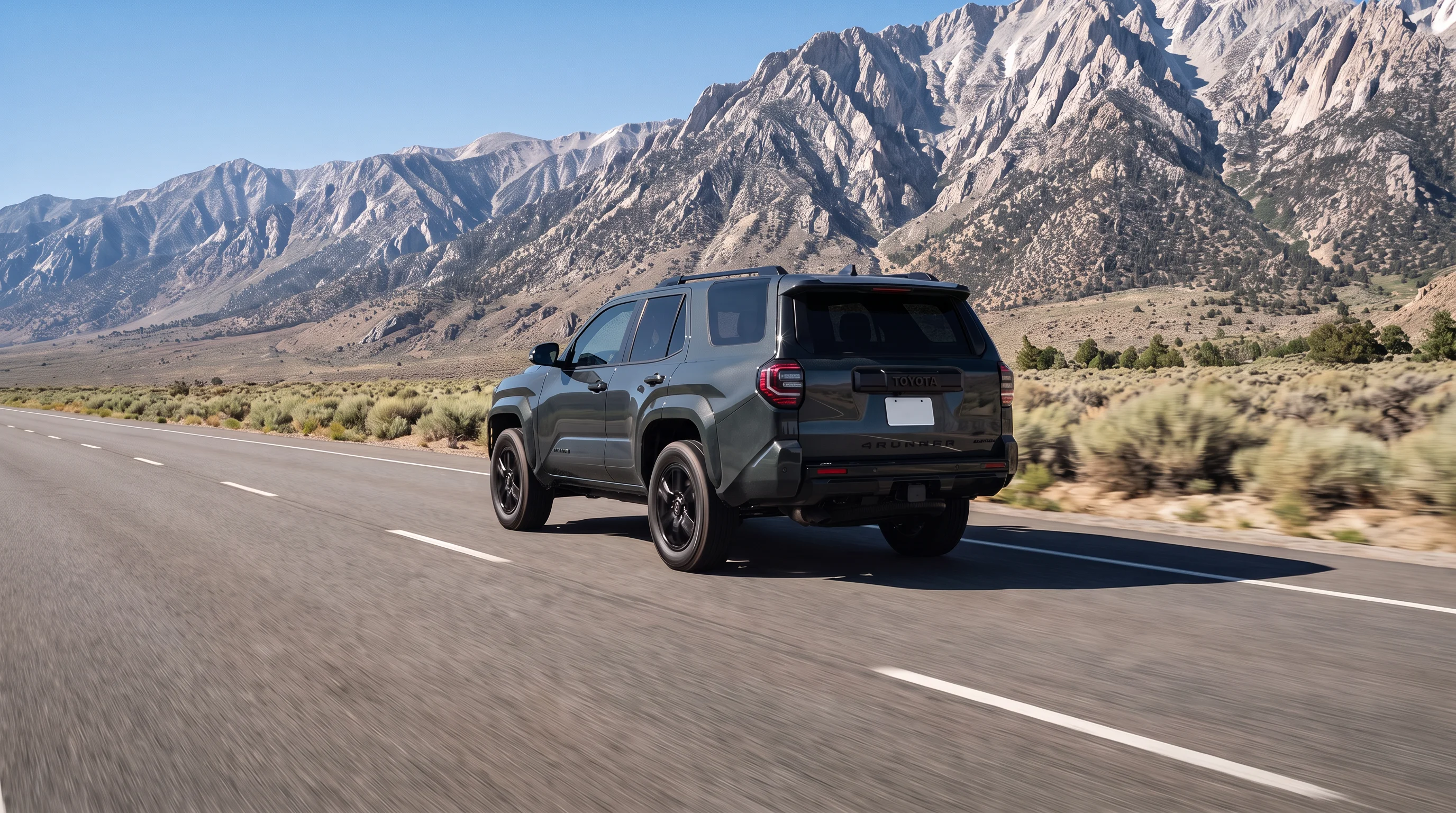
A pre-trip vehicle inspection is worth paying for because finding hidden mechanical wear, compromised tires, low fluid levels, or a weak battery before you leave prevents roadside emergencies, unexpected towing bills, and long delays far from home. A professional safety check resolves small problems in the service bay instead of on the shoulder of an interstate.
Preparing for a long highway drive takes more than filling the tank and packing the luggage. Routine maintenance keeps a vehicle running well on daily errands, but long-distance driving loads components with sustained speed, high heat, and heavy passenger or cargo weight. Catching a deteriorating serpentine belt or a slow brake fluid leak in your driveway costs far less than dealing with an overheated engine or a failed brake caliper hundreds of miles from home.
A comprehensive multi-point inspection evaluates every critical system using professional diagnostic equipment and a vehicle lift. Technicians examine what a driveway walk-around never reveals — lower suspension ball joints, inner tire tread wear, brake rotor thickness, and battery reserve capacity.
If your vehicle is due for service or heading out on a long trip, OREMOR Automotive Group’s certified technicians can evaluate it before you go. Call 909-323-0539 or find the OREMOR service center nearest you in Ontario and across the Inland Empire.
What a Pre-Trip Inspection Covers That an Oil Change Does Not
A standard oil change drains degraded engine lubricant and installs a fresh oil filter. A pre-trip vehicle inspection is a comprehensive safety audit that examines the major mechanical, electrical, fluid, and structural systems across the whole vehicle.
An oil change is essential routine maintenance, but relying on it as a substitute for a road trip safety check leaves critical components unexamined. Vehicles built for towing or off-road use need detailed checks of transfer case fluid, differential seals, steering linkages, and underbody skid plates — none of which fall inside the boundary of a basic lube service. If you are not sure what your vehicle is due for before a long drive, start with our service and parts tips hub.
Cited Source: AAA Car Care — Fluids — undercar fluids require technician access and inspection.
Brake System Diagnostics
Measuring front and rear pad thickness, inspecting hydraulic lines for corrosion, and checking rotor surfaces for heat stress and uneven wear.
Electrical and Battery Testing
A digital load test to measure cold cranking amps, plus a check of charging output from the alternator.
Underbody and Suspension Checks
Inspecting shock absorbers for leaks, verifying steering tie-rod tightness, and examining suspension bushings for dry rot.
Cooling System Integrity
Pressure-testing the radiator cap, inspecting upper and lower hoses for soft spots, and verifying cooling fan engagement.
Tire and Wheel Health
Checking tread depth across the inner, center, and outer grooves while evaluating spare tire pressure and wheel mounting torque.
Should You Get an Oil Change Right Before a Road Trip?
Schedule the oil change about a week, or roughly 500 miles, before departure rather than on the morning you leave. A week of local driving gives you time to verify fluid levels and catch a minor installation issue — a loose drain plug, a mis-seated filter gasket — before you reach high-speed highways.
Fresh engine oil matters more on a long trip than on a short commute. Oil lubricates internal moving parts, reduces friction, carries heat away, cleans internal engine surfaces, and prevents sludge from forming under sustained load.
Changing oil immediately before merging onto the highway leaves no margin to catch a small oversight. A slow drip from an improperly seated filter or an under-tightened drain plug is rare, but it can drain reserves over several hours of continuous driving. Service five to seven days out, then watch the dipstick and your parking spot for fresh drips before you go.
The information in this article is general guidance and does not constitute a specific diagnostic or repair recommendation for any individual vehicle. Repair and maintenance decisions should be made in consultation with a certified technician based on the specific condition of your vehicle.
Cited Source: AAA Car Care — Fluids — engine oil function and condition checks.
Fluids and Coolant to Check Before You Travel
Check engine oil, engine coolant, brake fluid, transmission fluid, power steering fluid, and windshield washer fluid before any multi-state trip. Coolant needs professional inspection or a flush if it looks cloudy or rust-colored, carries floating debris, or if operating temperatures run higher than normal.
Check fluids with the vehicle on level ground, the engine off, and fully cooled. For engine oil, pull the dipstick, wipe it with a lint-free rag, reinsert it fully, and withdraw it again — the level should rest between the minimum and maximum marks. Color is not the test most drivers think it is: new oil runs light gold to brown, and oil darkening in service means the detergents are doing their job, not that the oil is spent. Follow the interval in your owner’s manual, and have the engine checked if the oil looks milky or thick, or very thin with a strong fuel odor.
Verify coolant through the translucent overflow reservoir, with the engine cold and not running. Never open a radiator cap while the engine is hot; the system is pressurized and hot coolant can cause severe burns. Coolant color identifies which coolant technology the vehicle uses, not how healthy the fluid is, so check your owner’s manual for the correct type rather than going by the shade in the tank. A well-maintained cooling system keeps most of its original color; coolant that has gone dirty, discolored, or shows traces of rust should be replaced before a long drive.
Brake fluid absorbs moisture from the air over time, and that moisture lowers the fluid’s boiling point — which is what produces a spongy pedal during repeated hard braking. Finally, carry an extra gallon of all-season washer fluid for sudden rain, dust, and highway bug splatter.
| Fluid | Healthy Condition | Warning Sign |
|---|---|---|
| Engine oil | Light gold to brown when new; darkening in service is normal and is not by itself a reason to change it | Milky or thick, or very thin with a strong fuel odor — have the engine checked |
| Engine coolant | Holds most of its original color; level at or above the cold mark with the engine cold | Dirty, discolored, or showing traces of rust |
| Brake fluid | Clear to amber on DOT 3 and DOT 4 systems; level between the minimum and maximum marks | Dark brown or black |
| Automatic transmission fluid | Red or pink when new; reddish-amber to medium brown in service is normal | Dark brown or black, milky pink or brown, or a burnt smell at any color |
| Power steering fluid | Level steady between the minimum and maximum marks | A significant drop, or needing to top it up more than once a year — a leak |
The information in this article is general guidance and does not constitute a specific diagnostic or repair recommendation for any individual vehicle. Repair and maintenance decisions should be made in consultation with a certified technician based on the specific condition of your vehicle.
Cited Source: AAA Car Care — Fluids — brake fluid condition and moisture effects.
Checking Tire Pressure, Tread Depth, and the Spare
Check tire pressure cold, using the PSI listed on the driver-side door jamb placard — never the maximum pressure molded into the tire sidewall. Cold means the vehicle has not been driven for at least three hours. Driving heats the air inside the tire and produces artificially high readings that mask real underinflation, and underinflated tires build excessive heat at highway speeds, burn more fuel, and raise the risk of sudden tread separation.
Tread depth determines how well a tire channels water away from the contact patch to prevent hydroplaning. The penny test answers one question: insert a penny into the deepest groove with Lincoln’s head upside down and facing you, and if the top of his head stays fully visible, the tread is at or below 2/32 of an inch — the replacement threshold NHTSA and the tire industry use. For a safer wet-weather margin, measure with a tread depth gauge or repeat the test with a quarter, which marks 4/32 of an inch.
Inspect sidewalls for bulges, deep cuts, and cracking, and look for uneven wear across the tire shoulders, which often points to an alignment problem.
Do not overlook the spare. Inflate it to the pressure specified for it on the placard, confirm the jack, lug wrench, and wheel lock key are stored securely, and calculate total cargo weight before leaving. Luggage, roof carriers, and passengers all count toward the load limit printed on that same placard, and that limit must never be exceeded.
| Check | Where the number comes from | What to look for |
|---|---|---|
| Inflation pressure | Driver-side door jamb placard — never the tire sidewall | The placard PSI, measured cold |
| Tread depth | Penny test, quarter test, or a tread depth gauge | Replace at 2/32 of an inch; a quarter marks the safer 4/32 of an inch |
| Spare tire | The pressure specified for the spare on the placard | Inflated and ready, with the jack, lug wrench and wheel lock key stored securely |
| Total load | Load limit printed on the same placard | Luggage, roof carriers and passengers together stay under the limit |
The information in this article is general guidance and does not constitute a specific diagnostic or repair recommendation for any individual vehicle. Repair and maintenance decisions should be made in consultation with a certified technician based on the specific condition of your vehicle.
Cited Source: NHTSA — Tires — cold inflation pressure, placard load limits, tread depth and the penny test.
What Voltage Indicates a Weak Car Battery?
A resting voltage below 12.4 volts indicates a weak charge, and anything under 12.0 volts signals a severely discharged or failing battery that may leave you stranded. A healthy, fully charged 12-volt battery reads between 12.6 and 12.8 volts on a multimeter with the vehicle off and parked.
| Resting Voltage (engine off) | What It Means |
|---|---|
| 12.6 – 12.8 volts | Healthy and fully charged |
| Below 12.4 volts | Weak charge — have it tested |
| Below 12.0 volts | Severely discharged or failing |
Battery failure is the single most common reason drivers call for emergency roadside service. High ambient temperatures degrade internal plates over time — a real factor across Ontario and the Inland Empire, where sustained heat can cut a battery’s usual three-to-five-year life closer to two — while cold temperatures reduce available cranking power. Visual warning signs include white, blue, or greenish powdery corrosion around the terminals, a swollen case, or slow cranking at startup.
If your battery is more than three years old, a visual check is not enough to guarantee reliability on a long trip. A professional load test measures how much current the battery delivers under simulated starter load, revealing internal cell weakness long before the battery fails to start the engine.
The information in this article is general guidance and does not constitute a specific diagnostic or repair recommendation for any individual vehicle. Repair and maintenance decisions should be made in consultation with a certified technician based on the specific condition of your vehicle.
Cited Source: AAA — Roadside Assistance — dead batteries as the most common roadside call | AAA Mountain West Group — heat effects on battery life.
Common Questions About Road Trip Maintenance
How long does a pre-trip vehicle inspection take at a service center?
Plan on leaving the vehicle with the service department rather than waiting on a quick turnaround. The inspection involves putting the vehicle on a lift, running digital battery and electrical load tests, pulling wheels to measure brake friction material, checking fluid clarity, and inspecting suspension, steering, and exhaust components from underneath. Your service advisor can give you a time estimate when you book.
Can a sudden temperature drop change my tire pressure before a road trip?
Yes. Ambient temperature swings directly affect tire pressure — as a general rule, roughly 1 PSI for every 10-degree Fahrenheit change in air temperature. Driving from warm valleys into cold mountain elevations, or through a sudden seasonal front, can drop cold tire pressure noticeably overnight, which makes a morning PSI check worth the two minutes before you start the day’s highway miles.
What emergency tools should I pack alongside the spare tire?
Alongside a fully inflated spare, a working jack, and a lug wrench, your cargo area should carry a tire pressure gauge, a high-lumen flashlight with spare batteries, heavy-duty jumper cables, work gloves, a basic hand tool set, reflective hazard triangles, a first-aid kit, and an extra gallon of washer fluid.
How do I check whether my vehicle has open safety recalls before traveling?
Find your vehicle’s 17-character Vehicle Identification Number — it is stamped on the driver-side dashboard near the windshield and printed on your registration card — and enter it into the National Highway Traffic Safety Administration’s recall lookup tool. Any uncompleted safety recall will appear, and federal law requires authorized brand dealerships to perform recall repairs free of charge.
Cited Source: NHTSA — Check for Recalls — VIN lookup and no-charge recall repair | Case Western Reserve University — tire pressure change per 10-degree temperature swing.
The information in this article is general guidance and does not constitute a specific diagnostic or repair recommendation for any individual vehicle. Repair and maintenance decisions should be made in consultation with a certified technician based on the specific condition of your vehicle.
Inspecting your vehicle before a long drive protects your family and prevents breakdown costs you can avoid. OREMOR Automotive Group’s certified service team can evaluate your brakes, tires, battery, and engine systems before your next trip. Call 909-323-0539 to set up a pre-trip inspection, or find the service center closest to you.
Disclaimers
The information in this article is general guidance and does not constitute a specific diagnostic or repair recommendation for any individual vehicle. Repair and maintenance decisions should be made in consultation with a certified technician based on the specific condition of your vehicle.
Cited Sources
AAA Car Care — Fluids — engine oil and brake fluid condition.
NHTSA — Tires — cold inflation pressure, placard load limits, tread depth.
NHTSA — Check for Recalls — VIN recall lookup and no-charge recall repair.
AAA — Roadside Assistance — dead batteries as the most common roadside call.
AAA Mountain West Group — heat effects on battery life.
Case Western Reserve University — tire pressure change per 10-degree temperature swing.







0 comment(s) so far on Road Trip Checklist: Pre-Trip Vehicle Inspection