

What Is a Technical Service Bulletin (TSB)? What Car Owners Should Know
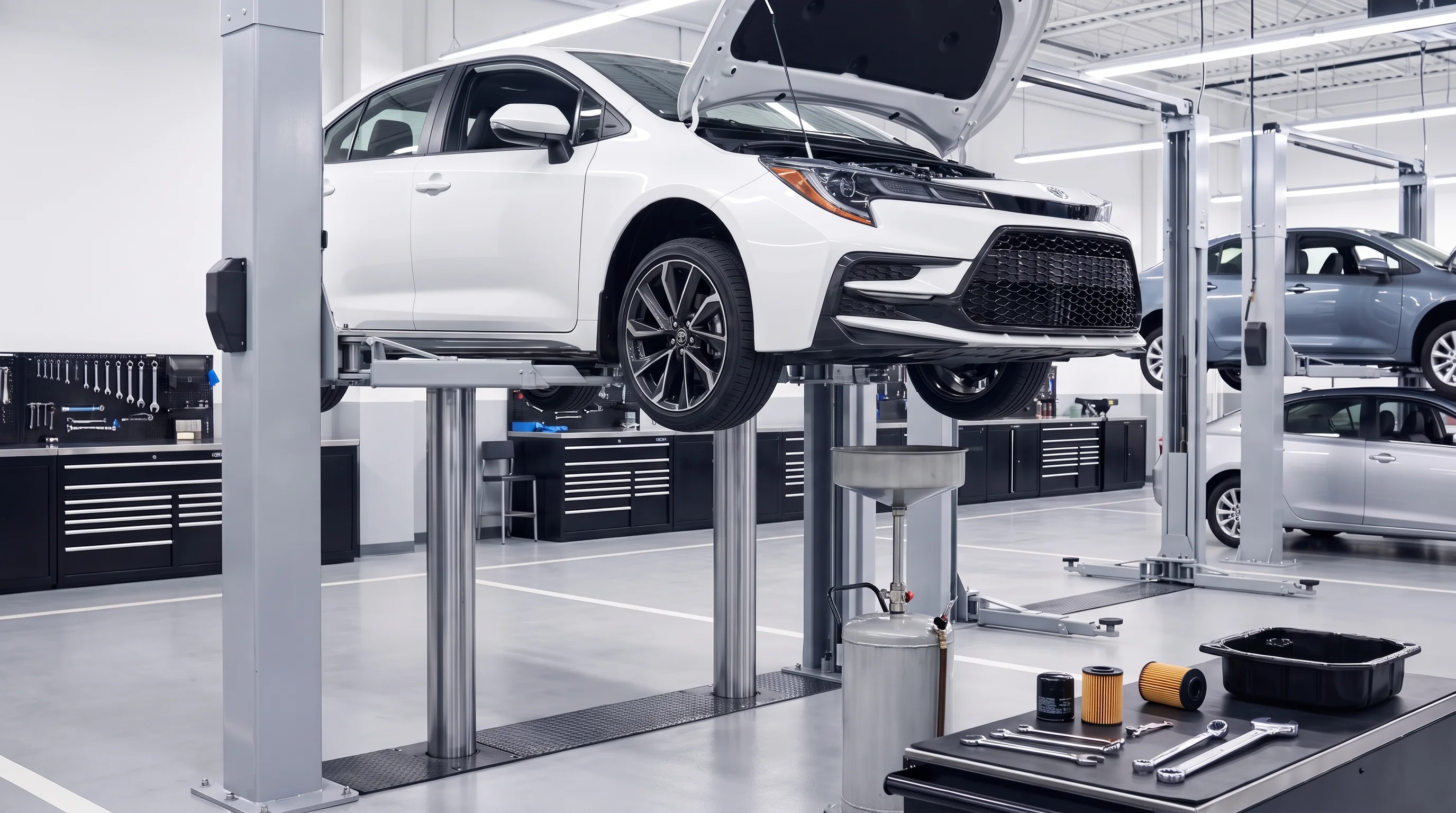
A Technical Service Bulletin (TSB) is an official communication issued by a vehicle manufacturer to dealership service departments detailing standardized diagnostic procedures, updated repair steps, revised part numbers, or software calibrations for a known, recurring condition on specific vehicle models and model years. TSBs typically address non-safety performance or comfort conditions, and they are written for professional technicians rather than for owners.
When automotive engineers identify a pattern of unexpected mechanical, electrical, or cosmetic symptoms across a vehicle line, they author a Technical Service Bulletin. The document acts as a factory repair guide for certified technicians. Rather than requiring a service bay to spend hours troubleshooting a mysterious rattle, an infotainment freezing issue, or a harsh transmission shift, the bulletin identifies the root cause and the factory-recommended solution.
Technical Service Bulletin Overview
| Attribute | What It Means |
|---|---|
| Purpose | Standardizes diagnostics and repairs for a recurring, documented condition |
| Issuer | Vehicle manufacturer and OEM engineering teams |
| Audience | Dealership technicians and authorized service departments |
| Obligation | No obligation to repair the vehicle or notify owners; filing a copy with NHTSA is required by federal regulation |
| Cost | Covered under an active factory warranty when the bulletin specifies warranty eligibility; otherwise the owner pays parts and labor‖ |
| Public Access | Searchable free of charge on NHTSA.gov under manufacturer communications |
‖ Warranty Disclaimer: This information is provided for general educational purposes only and does not constitute legal advice. Warranty coverage depends on the specific terms of your vehicle’s warranty agreement. Consult your owner’s manual or a qualified legal professional for guidance on your individual situation.
Cited Source: 49 CFR § 579.5; NHTSA Manufacturer Communications
For vehicle owners, understanding bulletins helps demystify unexpected vehicle behavior. When drivers arrive at one of our service departments describing an intermittent electronic glitch or a minor transmission shift delay, technicians check factory databases for active bulletins before beginning labor-intensive diagnostic tear-downs.
What a Technical Service Bulletin Contains
| Bulletin Element | What It Contains |
|---|---|
| Affected vehicles | Model years, build dates, and trim configurations the bulletin applies to |
| Symptoms | Detailed condition descriptions reported by drivers and field technicians |
| Diagnostics | Step-by-step diagnostic trees and required electrical or mechanical measurements |
| Parts and software | Updated replacement part numbers or specialized software file versions |
| Labor | Standard labor operation codes and repair time allowances used for billing and warranty claims |
Cited Source: Toyota Owners Support — What is a Technical Service Bulletin (TSB) and how is it obtained?
What Is the Difference Between a TSB and a Vehicle Safety Recall?
The primary difference is that a recall addresses a defect creating an unreasonable safety risk or a failure to meet federal motor vehicle safety standards, while a Technical Service Bulletin typically covers non-emergency technical, electrical, or mechanical conditions. Federal law requires manufacturers to remedy a safety recall without charge regardless of mileage, but that free-remedy obligation does not apply if the vehicle was bought by its first purchaser more than 15 calendar years before the recall notice is issued. Bulletin repairs are covered without cost only when the vehicle remains under an active factory warranty or a dedicated service campaign.‖
‖ Warranty Disclaimer: This information is provided for general educational purposes only and does not constitute legal advice. Warranty coverage depends on the specific terms of your vehicle’s warranty agreement. Consult your owner’s manual or a qualified legal professional for guidance on your individual situation.
Safety recalls are regulated by the National Highway Traffic Safety Administration (NHTSA). When a defect involves critical components such as airbags, steering gear, seatbelts, fuel lines, or braking systems, manufacturers notify registered owners by first-class mail within 60 days of notifying NHTSA of the recall decision. Recalls are tied to individual 17-character Vehicle Identification Numbers (VINs), allowing safety agencies and service centers to track repair completion.¶
¶ Driver Assistance / Safety Disclaimer: Driver-assist and safety systems are supplemental aids and are not a substitute for safe, attentive driving. Their effectiveness depends on weather, road, and traffic conditions and other factors. Always obey traffic laws and stay attentive to the road. See your owner’s manual for system details and limitations.
TSB vs. Vehicle Safety Recall at a Glance
| Category | Technical Service Bulletin | Vehicle Safety Recall |
|---|---|---|
| Primary focus | Performance, noise, electrical glitches, comfort | Critical safety defects and federal compliance |
| Government mandate | Filing a copy with NHTSA is required; performing the repair is advisory | Mandated and monitored under federal law |
| Cost to owner | Covered only under an active factory warranty or campaign‖ | Without charge, unless first purchased more than 15 calendar years before notice |
| Owner notification | No direct mail notice required | Direct mail notification to registered owners, within 60 days of the recall decision |
| Identification method | Indexed by vehicle year, make, and model | Tracked by individual 17-character VIN |
| Where to look it up | NHTSA.gov, manufacturer communications tab | NHTSA.gov VIN or license plate lookup |
‖ Warranty Disclaimer: This information is provided for general educational purposes only and does not constitute legal advice. Warranty coverage depends on the specific terms of your vehicle’s warranty agreement. Consult your owner’s manual or a qualified legal professional for guidance on your individual situation.
Technical Service Bulletins are advisory documents, but filing them is not optional. Federal regulation requires manufacturers to furnish NHTSA with copies of bulletins and other communications regarding any defect, whether or not that defect is safety-related. What bulletins do not trigger is a mandatory mailing to consumers. A bulletin might address a squeaking suspension bushing, an erratic Bluetooth pairing sequence, or an updated engine control module flash to eliminate a stumble during cold starts. Because these conditions do not compromise passenger safety, manufacturers handle bulletin fixes through standard service routines rather than emergency safety campaigns.
Cited Source: 49 CFR § 579.5(a); NHTSA — Resources Related to Investigations and Recalls
Does a Vehicle Manufacturer Cover Repair Costs for a TSB?
Manufacturers cover Technical Service Bulletin repair costs only when the bulletin specifies warranty eligibility, the vehicle is within its original warranty parameters, and the vehicle is actually exhibiting the condition the bulletin describes, or when a special extended coverage program applies. If the vehicle is outside its factory warranty period and no special program applies, the owner is responsible for the labor and replacement parts. A bulletin by itself does not extend a warranty.‖
‖ Warranty Disclaimer: This information is provided for general educational purposes only and does not constitute legal advice. Warranty coverage depends on the specific terms of your vehicle’s warranty agreement. Consult your owner’s manual or a qualified legal professional for guidance on your individual situation.
Which Warranty Covers Which Bulletin
When a vehicle qualifies, the dealership submits the claim directly to the manufacturer using the labor operation codes and part numbers specified in the bulletin. Coverage terms differ by warranty type, and emissions coverage differs between federal and California standards.
| Coverage Type | What It Typically Covers | Coverage Period‖ |
|---|---|---|
| Bumper-to-Bumper Warranty | May cover electronic glitches, interior trim adjustments, climate control software updates, and general mechanical bulletins | Varies by manufacturer — see your warranty booklet |
| Powertrain Warranty | May cover internal engine software recalibrations, transmission control module updates, and differential noise remedies | Varies by manufacturer — see your warranty booklet |
| Federal Emission Control Warranty | Emission control and emission-related parts, including control-unit and onboard-diagnostic bulletins affecting tailpipe emissions | 2 years / 24,000 miles; 8 years / 80,000 miles for specified major components (catalytic converter, emissions control unit, onboard diagnostic device) |
| California Emission Control Warranty | All emissions-related parts on California-certified vehicles, with longer coverage for high-cost parts listed in the owner’s manual | 3 years / 50,000 miles; 7 years / 70,000 miles for high-cost emissions-related parts |
| Special Service Campaigns | Voluntary manufacturer programs extending coverage for specific bulletin repairs beyond the standard warranty period | Defined by the campaign — a dealer can check your VIN for open campaigns |
‖ Warranty Disclaimer: This information is provided for general educational purposes only and does not constitute legal advice. Warranty coverage depends on the specific terms of your vehicle’s warranty agreement. Consult your owner’s manual or a qualified legal professional for guidance on your individual situation.
If your vehicle is out of warranty, a bulletin remains a valuable diagnostic asset. Even when you pay for the repair out of pocket, referring to an established bulletin saves money by eliminating unnecessary diagnostic labor. Instead of paying a technician to investigate the problem from scratch, the service team can apply the tested factory remedy directly.
What Information Is Needed to Search for TSBs Online?
To search for Technical Service Bulletins online, you need your vehicle’s model year, make, and model. NHTSA publishes manufacturer communications by year, make, and model rather than by VIN, so the public database does not require your Vehicle Identification Number. The 17-character VIN matters at the service drive, where it lets a factory service department cross-reference production dates and exact option packages to confirm which bulletins, campaigns, or warranty extensions apply to your specific vehicle.
Essential TSB Search Information
| Information Needed | Why It Matters | Required for the Public NHTSA Search? |
|---|---|---|
| Vehicle year | Identifies model year engineering revisions | Yes |
| Make and model | Narrows results to the exact platform and body style | Yes |
| Engine and transmission | Distinguishes powertrain software bulletins from hardware bulletins | No — used to narrow results once you have the list |
| 17-character VIN | Verifies production date and factory equipment for campaign and warranty eligibility | No — needed at the service drive, not for the public search |
Where to Find Your VIN
- The lower-left corner of the dashboard, visible through the front windshield
- The safety compliance sticker located inside the driver’s side door jamb
- Official vehicle documentation, including your registration card or auto insurance policy
When searching public NHTSA records, open the manufacturer communications tab after entering your vehicle details. Public listings show bulletin reference numbers, publication dates, and brief summary descriptions of the covered condition. Bringing those reference numbers to a certified service advisor allows them to pull the complete multi-page factory document, including wiring schematics and revised component specifications.
Cited Source: NHTSA — Check for Recalls; Consumer Reports — How to Get a Free Technical Service Bulletin
How Can Pre-Purchase TSB Checks Help in Negotiating Used Vehicle Prices?
Conducting a pre-purchase TSB check reveals documented manufacturer issues and recommended repairs for a specific used vehicle before you finalize a deal. Identifying unaddressed bulletins gives buyers leverage to request that the seller complete the necessary technical update or deduct the estimated repair cost from the final purchase price.
What a Pre-Purchase Bulletin Check Tells You
| Signal | What It Tells You | How to Use It |
|---|---|---|
| Diagnostic cost offset | A rough idle or transmission lag on the test drive matches an open bulletin, proving the issue is a known condition with a documented fix | Obtain a formal repair estimate from a service department and ask the seller to credit that amount |
| Maintenance verification | Whether previous owners addressed documented bulletins | Treat a clean bulletin history at an authorized facility as evidence of diligent care |
| Scope clarity | Whether a symptom calls for a simple control module reflash or an expensive mechanical replacement | Set your negotiating position to the actual repair scope rather than a guess |
Using bulletin data during purchase negotiations protects you from unexpected post-sale repair bills. Presenting official manufacturer bulletin summaries turns vague mechanical concerns into concrete technical facts during price discussions.
Cited Source: NHTSA — Check for Recalls, manufacturer communications; Kelley Blue Book — Technical Service Bulletins Versus Recalls
Can Independent Repair Shops Access Official Manufacturer TSB Databases?
Yes. Independent automotive repair shops can access official manufacturer Technical Service Bulletin databases through paid professional technical information subscriptions and OEM service portals. These platforms provide independent technicians with the factory diagnostic trees, revised part specifications, and published labor operations issued by vehicle manufacturers.
What Still Requires a Franchised Dealership
| Limitation | Why It Requires a Dealership |
|---|---|
| Factory software calibration | Many modern bulletins require reflashing onboard control modules using proprietary OEM diagnostic software interfaces |
| Specialized service tools | Complex bulletins may specify custom factory tools or diagnostic harness adapters typically stocked by franchised dealership service bays |
| Warranty claim processing | Independent shops cannot perform no-cost bulletin repairs under a factory warranty or service extension; those claims must be processed through an authorized dealer network‖ |
‖ Warranty Disclaimer: This information is provided for general educational purposes only and does not constitute legal advice. Warranty coverage depends on the specific terms of your vehicle’s warranty agreement. Consult your owner’s manual or a qualified legal professional for guidance on your individual situation.
Working with a factory-authorized dealership ensures that bulletin repairs use genuine OEM replacement parts and the latest official software releases from the vehicle manufacturer.
Cited Source: Toyota Owners Support — Technical Information System subscription access; OEM warranty administration requirements
Common Questions About Automotive Technical Service Bulletins
Are dealerships legally required to perform TSB repairs on every visiting vehicle?
No. Dealerships are not legally obligated to perform bulletin repairs automatically unless the vehicle owner reports a matching symptom or specifically requests the service. Because bulletins are technical repair guides rather than mandatory safety actions, service departments apply bulletin procedures during diagnostic testing to address specific customer complaints or scheduled maintenance checks.
Does a Technical Service Bulletin mean a vehicle model is unreliable?
No. A bulletin indicates that a manufacturer actively monitors real-world vehicle performance and publishes standardized repair solutions for technicians. Rather than reflecting poor overall reliability, bulletins show that engineers identified a specific technical condition, such as a minor transmission hesitation or an infotainment software glitch, and established a precise diagnostic and repair procedure.
Can a single vehicle have multiple TSBs filed during its lifespan?
Yes. Complex modern vehicles commonly accumulate many Technical Service Bulletins over several years as manufacturers refine software calibrations, diagnostic routines, and replacement components. Many bulletins address minor electrical adjustments, body trim squeaks, or updated fluid specifications that apply only to specific trim levels or build dates within a model year.
How do service campaigns and warranty extensions differ from standard TSBs?
A standard bulletin provides technical instructions without guaranteeing a free repair out of warranty. Service campaigns and warranty extensions are formal manufacturer funding programs. A campaign or extension often uses an existing bulletin repair method but guarantees a no-cost repair, or reimbursement for owners who already paid, across a designated VIN range for a specified period or mileage limit.‖
‖ Warranty Disclaimer: This information is provided for general educational purposes only and does not constitute legal advice. Warranty coverage depends on the specific terms of your vehicle’s warranty agreement. Consult your owner’s manual or a qualified legal professional for guidance on your individual situation.
What should I do if my vehicle exhibits symptoms described in a TSB?
Schedule a diagnostic appointment with a factory-authorized dealership service center. Providing the service advisor with details about when the condition occurs helps technicians replicate the symptom and verify whether the specific bulletin procedure and updated parts apply to your vehicle.
Cited Source: Consumer Reports — service campaigns and warranty extensions; NHTSA Manufacturer Communications
TSB Inspections and Service at OREMOR Automotive Group
OREMOR Automotive Group operates 18 dealerships across Southern California and Texas, and our service teams provide diagnostic evaluations, factory bulletin verification, and manufacturer-certified repairs for the brands we represent. Whether you are addressing an unexpected dashboard warning or verifying service communications before a trip, our certified technicians use manufacturer-specific diagnostic tools and current factory documentation to keep your vehicle running properly.
If you suspect your vehicle requires a technical update, or you want to check for outstanding service communications, contact our team at 909-323-0539 or find the OREMOR service department nearest you to schedule a diagnostic inspection.‖
‖ Warranty Disclaimer: This information is provided for general educational purposes only and does not constitute legal advice. Warranty coverage depends on the specific terms of your vehicle’s warranty agreement. Consult your owner’s manual or a qualified legal professional for guidance on your individual situation.
Disclaimers
‖ Warranty Disclaimer: This information is provided for general educational purposes only and does not constitute legal advice. Warranty coverage depends on the specific terms of your vehicle’s warranty agreement. Consult your owner’s manual or a qualified legal professional for guidance on your individual situation.
¶ Driver Assistance / Safety Disclaimer: Driver-assist and safety systems are supplemental aids and are not a substitute for safe, attentive driving. Their effectiveness depends on weather, road, and traffic conditions and other factors. Always obey traffic laws and stay attentive to the road. See your owner’s manual for system details and limitations.







0 comment(s) so far on What Is a Technical Service Bulletin (TSB)? What Car Owners Should Know