

What Vehicles Are Exempt from Smog Checks in California?
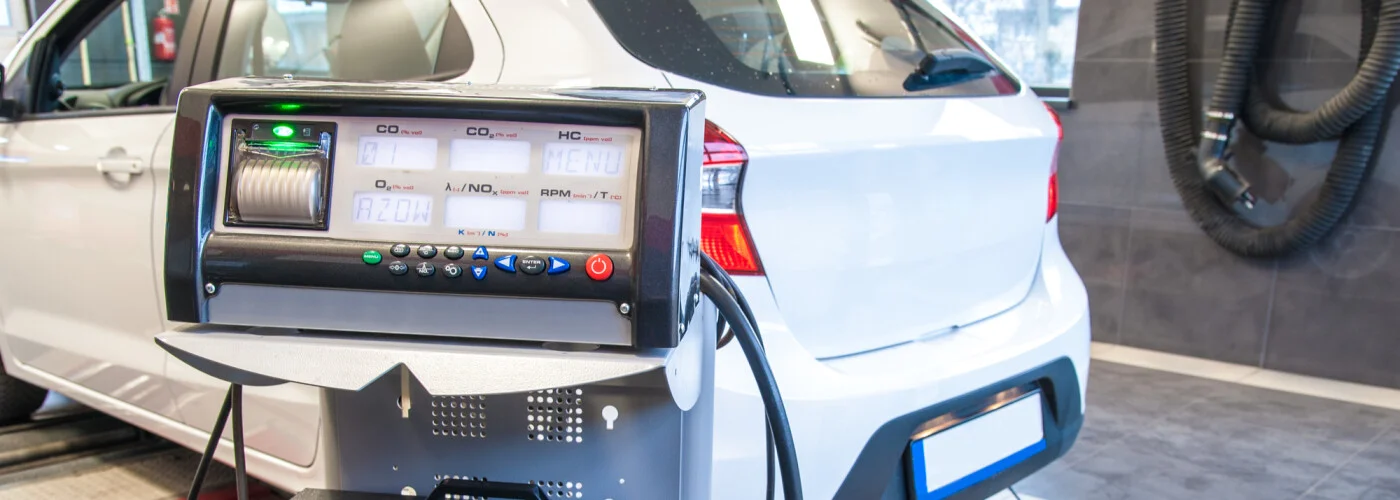
Several categories of vehicle are exempt from California’s biennial Smog Check: gasoline, hybrid, and alternative-fuel vehicles eight model years old or newer; gasoline vehicles from model year 1975 or older; diesel vehicles from 1997 or older; diesel vehicles rated above 14,000 pounds GVWR; electric vehicles; and motorcycles. Sales work differently. At a change of ownership, gasoline, hybrid, and alternative-fuel vehicles four model years old or newer are exempt as well.
Knowing whether your vehicle is exempt saves you a trip. It also keeps your registration on schedule. California’s Smog Check Program is run by the Bureau of Automotive Repair (BAR). Most cars and light trucks on public roads need periodic emissions testing. The law carves out exemptions based on age, fuel type, weight, and the type of transaction.
How the Model-Year Exemptions Work
Gasoline, hybrid, and alternative-fuel vehicles get an eight-model-year exemption for routine registration renewals. Instead of visiting a testing station, you pay a smog abatement fee with your DMV renewal. The math is simple. Add eight years to the model year. BAR uses a 2020 model-year vehicle as its own example, which first needs a biennial Smog Check in 2028.
A separate four-model-year exemption applies when a vehicle changes hands. Rather than a Smog Check, the buyer pays a smog transfer fee at the DMV.
Diesels follow different rules. Diesel cars and trucks from model year 1997 or earlier are fully exempt. So are diesel vehicles rated above 14,000 pounds GVWR. Beyond that, diesels get no model-year exceptions at all. There is no eight-year renewal grace period and no four-year transfer exemption. Any diesel from 1998 or newer at 14,000 pounds GVWR or less requires testing.
A new exemption for classic cars is on the way. In September 2026, California enacted SB 1392, which phases in a Smog Check exemption for qualifying collector vehicles from model years 1976 through 1985, adding one model year at a time through 2033. The first vehicles can begin qualifying in 2028, and BAR is still developing the process owners will use to show eligibility. Until then, the current 1975-and-older cutoff applies.
California Smog Check Exemptions at a Glance
| Vehicle Type | Exempt From | Threshold |
|---|---|---|
| Gasoline, hybrid, alternative fuel | Biennial renewal check | 8 model years old or newer (smog abatement fee due instead) |
| Gasoline, hybrid, alternative fuel | Change-of-ownership check | 4 model years old or newer (smog transfer fee due instead) |
| Gasoline, hybrid, alternative fuel | All Smog Check requirements | Model year 1975 or older |
| Diesel | All Smog Check requirements | Model year 1997 or older |
| Diesel | All Smog Check requirements | Rated above 14,000 lbs GVWR |
| Electric | All Smog Check requirements | All model years |
| Motorcycles | All Smog Check requirements | All model years |
Where You Live Changes What You Need
Exemptions are only half the picture. California splits the state into three Smog Check program areas. The area where your vehicle is garaged and operated determines what is required.
| Program Area | Air Quality Status | What’s Required |
|---|---|---|
| Enhanced | Does not meet federal or state ozone and carbon monoxide standards | Biennial inspection, plus change of ownership and initial registration |
| Basic | Marginal air quality | Biennial inspection |
| Change of Ownership | More rural | Change of ownership or initial registration only |
Some counties fall into more than one area. If you are not sure which applies to you, BAR maintains the authoritative lookup. Your DMV renewal notice will also state plainly whether a Smog Certification is required. Drivers in Ontario can expect biennial testing, since the 91761 ZIP code sits inside San Bernardino County’s biennial smog area.
Can You Register a Car in California Without Passing a Smog Test?
It depends on whether your vehicle needs a Smog Check, and many don’t. Gasoline, hybrid, and alternative-fuel vehicles eight model years old or newer skip the check at registration renewal; a smog abatement fee is paid with your DMV renewal instead. Electric vehicles, motorcycles, gasoline vehicles from 1975 or older, and diesels from 1997 or older or rated above 14,000 pounds GVWR are exempt entirely. Where your vehicle is garaged matters too. In Change of Ownership areas, routine renewals don’t require a Smog Check at all.
When a check is required, passing it is a condition of registration. If your renewal notice is marked “Smog Certification Required,” paying your fees won’t produce a registration card or license plate sticker until a passing result is on file with the DMV. If the vehicle fails, registration stays on hold until the emissions repairs are done and a passing electronic record reaches the DMV. Driving without valid stickers exposes you to citations and fines.
Mileage doesn’t factor in. California sets Smog Check requirements by model year, fuel type, and weight, not by odometer reading.
Vehicles Coming From Another State
Vehicles bought in another state, or previously registered elsewhere, generally must pass a Smog Check before California title and plates are issued, even late-model vehicles. The eight-year exemption applies only to renewals. Electric vehicles, motorcycles, and other permanently exempt vehicles still don’t need one. The inspection also confirms that any aftermarket parts meet California rules. Passing an emissions test in another state does not substitute for it.
A separate rule applies to nearly new vehicles. California treats any vehicle with less than 7,500 miles on the odometer at the time of purchase as new. A new vehicle bought out of state by a California resident must be certified to California emissions standards to be registered here. The DMV’s out-of-state registration guide lists the limited exceptions.
What Happens When a Vehicle Fails
The station prints a Vehicle Inspection Report (VIR) detailing what went wrong. After repairs, the vehicle returns for a retest. Results then travel electronically through BAR’s Electronic Transmission Network to the Vehicle Information Database, which updates your DMV record.
What Components Are Tested During a California Smog Check?
A California Smog Check covers three things. First, a visual inspection of emissions hardware. Second, a functional test of specific systems. Third, either an OBD II diagnostic scan or a tailpipe emissions test.
What the Visual Inspection Covers
The visual inspection confirms that factory emissions components are present, connected, and unmodified. Per the BAR Smog Check Manual, technicians check:
- Exhaust gas recirculation (EGR) systems
- Catalytic converters and other after-treatment components
- Crankcase ventilation systems (PCV, CDR, CCV)
- Evaporative emissions (EVAP) controls
- Air injection systems
- Fuel metering, ignition spark controls, sensors, and related components
The Functional Test
The functional test begins with the malfunction indicator lamp, better known as the check engine light. With the key on and the engine off, the light must illuminate. Once the engine is running, it must go out. A light that never comes on, stays on, or flashes while running is a failure.
Fuel cap testing is narrower than most drivers expect. The fuel cap integrity test applies only to 1976 through 1995 vehicles with evaporative controls. On anything newer than 1995, that functional check is not performed.
Which Test Your Vehicle Gets
Inspectors choose the test system based on vehicle age, weight, and fuel type, as BAR describes.
| Vehicle | Test System | How It Works |
|---|---|---|
| Gasoline, 2000 and newer, up to 14,000 lbs GVWR | BAR-OIS | Reads the onboard computer directly |
| Diesel, 1998 and newer, up to 14,000 lbs GVWR | BAR-OIS | Reads the onboard computer directly |
| Hybrids, up to 14,000 lbs GVWR | BAR-OIS | Reads the onboard computer directly |
| Gasoline, 1976–1999 | BAR-97 | Tailpipe test — dynamometer in Enhanced Areas, two-speed idle elsewhere |
| Gasoline, 2000 and newer without OBD II | BAR-97 | Tailpipe test |
| Gasoline, above 14,000 lbs GVWR | BAR-97 | Tailpipe test |
What Is the Difference Between Test-Only and Test-and-Repair Stations?
Test-Only stations inspect vehicles without performing repairs. Test-and-Repair stations do both. California separates the two license types to limit conflicts of interest during official testing.
| Test-Only | Test-and-Repair | |
|---|---|---|
| Performs inspections | Yes | Yes |
| Performs repairs | No, with narrow no-charge exceptions | Yes — diagnose, adjust, repair |
| If your vehicle fails | You take it elsewhere for repairs | Repaired and retested on site |
| Required disclosures | Must give you BAR’s repair station list; may not steer you to a shop | Must disclose equipment, personnel, and policy limits in writing before inspection |
| Can require repairs at their facility | Not applicable | No |
A Test-Only station performs the inspection and nothing more. There are a few narrow exceptions. It may fix a component it damaged, make a repair needed to operate the vehicle safely on site, or reconnect a loose hose or vacuum line. All of those are done at no charge.
Test-and-Repair stations inspect, diagnose, adjust, and repair under one roof. Before the initial inspection, they must disclose in writing any limits on their equipment, personnel, or repair policies. The estimate must also state that you are free to have repairs and later inspections done somewhere else.
STAR Stations
BAR certifies some stations as STAR stations. It is a voluntary program open to both Test-Only and Test-and-Repair shops that meet elevated performance standards. If your DMV notice reads “Smog Certification Required at a STAR Station,” you must use one. STAR stations also handle directed vehicles flagged by BAR and vehicles identified as gross polluters. STAR Test-and-Repair shops are the only places state-subsidized repairs can be performed.
Who Pays for the Smog Check When Selling a Car in California?
In a private-party sale, the seller is responsible for providing a valid passing smog certificate. The check must be completed before the sale. The buyer needs a pass dated within the last 90 days.
Sellers should hand the buyer a copy of the passing Vehicle Inspection Report at the time of sale. Without a valid certificate, the buyer runs into registration problems at the DMV. Responsibility for the necessary repairs generally lands back on the seller.
When the Seller Is Off the Hook
Several transactions are exempt from the seller’s obligation:
- Transfers between immediate family members, including a spouse, domestic partner, child, grandchild, parent, grandparent, or sibling
- Vehicles four model years old or newer, where the buyer pays a smog transfer fee instead
- Vehicles that completed a biennial Smog Check within the preceding 90 days
Why Buying From a Dealer Is Simpler
Buying from a licensed dealer carries a real advantage here. It is one of the few places where the rules genuinely favor a dealership over a private sale. A private-party purchase requires a certificate issued within the last 90 days. For a dealership purchase, the certificate is good for up to two years from the test date. That is a much wider window, and one less thing for a buyer to chase down at the DMV.
How Many Miles Must You Drive After Clearing a Check Engine Light?
Plan on about a week of normal driving. Clearing a code resets your vehicle’s readiness monitors. Until those monitors finish running, your vehicle will fail its Smog Check. That is true whether or not the light is on.
Readiness monitors are the onboard self-tests that evaluate catalytic converter efficiency, evaporative systems, oxygen sensors, and misfire detection. They reset whenever the onboard memory is cleared. That includes using a scan tool and disconnecting or replacing the battery. Until they report complete, the inspection equipment reads “not ready,” and that is an automatic failure. For gasoline vehicles from model year 2000 on, any incomplete monitor fails the inspection, with the evaporative system monitor as the only exception.
There is no universal drive cycle and no official mileage figure. The sequence that sets monitors is specific to each manufacturer. A technician can look up the correct pattern for your vehicle or run it on a dynamometer. The California Air Resources Board’s guidance for owners is straightforward: drive the vehicle the way you normally do for about a week, then check whether the monitors have set. A scan tool will show which ones are still incomplete.
The practical takeaway is simple. Do not clear a code on the way to the testing station. You will fail for incomplete monitors even with the light off.
The information in this article is general guidance and does not constitute a specific diagnostic or repair recommendation for any individual vehicle. Repair and maintenance decisions should be made in consultation with a certified technician based on the specific condition of your vehicle.
What Do Smog Checks Cost, and Is Financial Help Available?
What You’ll Pay
Smog Check prices are not regulated by BAR, so they vary from station to station. BAR’s May 2026 reporting puts the average inspection at $68.84 across all stations statewide, and $70.99 at STAR Test-and-Repair locations. On top of the station’s fee, the smog certificate fee is set by the state at $8.25 for every passing inspection.
Help With Repair Costs
If your vehicle fails and the repairs are expensive, BAR’s Consumer Assistance Program (CAP) may help. Eligibility is income-based. Gross household income must be at or below 225 percent of the federal poverty level. Repairs must be performed at a STAR Test-and-Repair station, and a consumer co-payment applies.
| Model year 1996 or newer | Model year 1976–1995 | |
|---|---|---|
| Maximum repair assistance | Up to $1,450 | Up to $1,100 |
| Co-payment | 20% of total diagnosis and repair cost at or below $1,812.50 | 20% of total diagnosis and repair cost at or below $1,375 |
| Above that threshold | You pay the total minus $1,450 | You pay the total minus $1,100 |
| Where repairs are performed | STAR Test-and-Repair station | STAR Test-and-Repair station |
Rebate and incentive program terms, funding availability, eligibility requirements, and deadlines are set by the administering agency and are subject to change or exhaustion of funds without notice. Amounts shown are maximums, not guarantees; actual rebate value depends on eligible costs and agency review. This dealership does not administer these programs and does not provide tax or legal advice. Confirm current requirements directly with the administering agency and consult a qualified tax professional regarding any tax consequences.
CAP also offers a vehicle retirement option for owners who would rather not repair a high-polluting vehicle. Incentives run from $1,350 with no income requirement up to $2,000 for income-eligible owners whose vehicle failed its most recent Smog Check. The payment comes when the vehicle is turned in to a BAR-contracted dismantler.
Frequently Asked Questions About California Smog Compliance
Does a hybrid vehicle require a California smog check when buying out a lease?
It depends on the vehicle’s age. A lease buyout is processed as a transfer of ownership, so the change-of-ownership rules apply. Hybrids are treated the same as gasoline and alternative-fuel vehicles. That means a hybrid four model years old or newer is exempt, and a smog transfer fee is paid instead. Older hybrids need a valid passing certificate. Because buyout paperwork can route through either the leasing company or a dealer, confirm the certificate requirement for your specific transaction with the DMV or the dealer handling it.
What happens if a vehicle fails a smog inspection because of modified engine software?
California’s OBD Smog Check inspection compares your vehicle’s Cal ID, the manufacturer’s software program name, against its CVN, a numeric code calculated from that program. Any change to the program produces a CVN that no longer matches, which exposes the modification. These checks have been part of the failure criteria for most 2000 and newer vehicles since July 2020. To pass, the computer must be restored to stock or to Air Resources Board approved software. Before installing any modified powertrain product, confirm it carries a valid Executive Order from CARB.
The information in this article is general guidance and does not constitute a specific diagnostic or repair recommendation for any individual vehicle. Repair and maintenance decisions should be made in consultation with a certified technician based on the specific condition of your vehicle.
How long is a passing California smog certificate valid once issued?
A passing certificate is valid for 90 days. That is the standard that applies to registration renewals and private-party transfers. Dealership purchases work differently, because a certificate from a licensed dealer is accepted for up to two years from the test date.
Are motorhomes and RVs subject to the same smog inspection rules in California?
Motorhomes and RVs follow the same criteria as other vehicles, applied to the chassis: fuel type, model year, and gross vehicle weight rating. A gasoline motorhome from 1976 or newer falls inside the testing requirement. A diesel RV from 1998 or newer rated at 14,000 pounds GVWR or less follows standard light-duty diesel rules. Because motorhome chassis weight ratings vary widely, check your door-jamb label and confirm with BAR if you are near the 14,000-pound threshold.
What should you bring with you when taking your vehicle in for a smog check?
Bring your DMV registration renewal notice if you have one. It lets the station verify your vehicle information and makes sure the correct certificate reaches the DMV. Keep the Vehicle Inspection Report for your records. If you are selling the vehicle, give the buyer a copy.
Staying Compliant Across Southern California
California’s Smog Check rules are more nuanced than a single statewide deadline. Exemptions turn on fuel type, model year, weight, and whether you are renewing or transferring. The program area where your vehicle is garaged then decides how often you are tested at all. Knowing where your vehicle lands on that grid is what keeps registration from becoming a problem.
When a check engine light shows up, the fastest path to a passing inspection is a clear one. Diagnose the underlying fault, complete the repair, and give the vehicle time to reset its readiness monitors before testing. OREMOR Automotive Group operates service departments at locations across Southern California and in Texas, and you can schedule at the location nearest you. If you are weighing where to take it, we covered how dealership service compares to an independent shop. Our Service & Parts Tips hub also collects maintenance schedules by brand.
Disclaimers
The information in this article is general guidance and does not constitute a specific diagnostic or repair recommendation for any individual vehicle. Repair and maintenance decisions should be made in consultation with a certified technician based on the specific condition of your vehicle.
Rebate and incentive program terms, funding availability, eligibility requirements, and deadlines are set by the administering agency and are subject to change or exhaustion of funds without notice. Amounts shown are maximums, not guarantees; actual rebate value depends on eligible costs and agency review. This dealership does not administer these programs and does not provide tax or legal advice. Confirm current requirements directly with the administering agency and consult a qualified tax professional regarding any tax consequences.






0 comment(s) so far on What Vehicles Are Exempt from Smog Checks in California?