
Search
-
or select -

Leasing offers lower monthly payments, factory warranty coverage for the length of most terms, and a new vehicle every few years. It also caps your annual mileage and builds no equity. Financing costs more per month at the start. In exchange, it gives you unlimited mileage, full freedom to modify the vehicle, and outright ownership once the loan is cleared. So should you buy or lease your next car? It comes down to how you plan to use the vehicle and how long you intend to keep it.
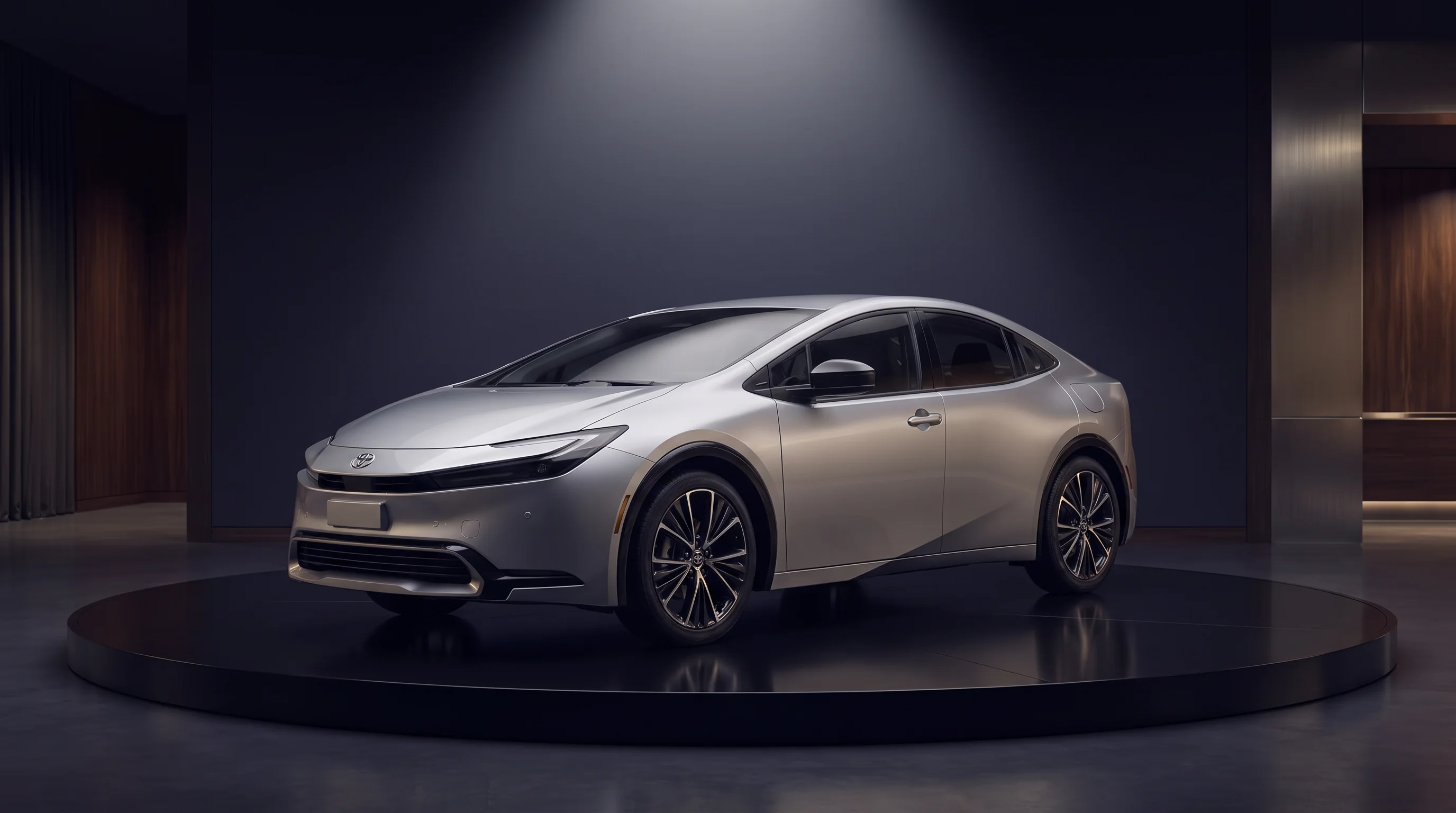
When you finance, every monthly payment reduces your loan principal. At the end you own a fully paid-off asset you can keep, sell, or trade in. When you lease, your payments cover only the vehicle’s projected depreciation over a fixed term, plus finance charges and administrative fees. You are paying for a portion of the vehicle’s value rather than all of it. That is why monthly lease payments are generally lower than loan payments on the same model.
California’s tax structure creates one of the sharpest distinctions between the two paths.
| Financial Factor | Vehicle Lease | Auto Loan (Financing) |
|---|---|---|
| Ownership status | The leasing company owns the vehicle for the term | You are the registered owner; the lender is the legal owner (lienholder) until the loan is paid |
| Sales tax assessment | Assessed on your monthly payments as you make them | Assessed upfront on the full purchase price |
| Equity building | None, unless you buy the vehicle at term end | Builds with every payment |
| Annual mileage | Capped by contract | Unlimited |
| End-of-term option | Return, renew, or buy out | Keep, sell, or trade in |
Across our dealerships in Southern California and Texas, our finance teams walk drivers through these structural differences in plain language, side by side.
The information in this article is general educational guidance about vehicle financing and leasing and does not constitute legal, tax, or financial advice. Terms, rates, fees, and applicable law vary by lender, lessor, transaction, and individual circumstance, and are subject to change. Consult your lease or finance agreement and a qualified professional for guidance on your specific situation.
Standard California consumer auto leases are closed-end contracts. They set a residual value upfront, so the lessee is not exposed to unpredictable market depreciation. Upfront signing costs are usually a bundle. They typically include the first month’s payment, registration fees, documentation charges, an acquisition fee, and any agreed capitalized cost reduction.
Understanding lease language starts with four terms.
The agreed sale price of the vehicle, which forms the baseline for payment calculations.
Cash down payment, trade-in allowance, or dealer rebate applied to lower the gross capitalized cost.
The lease equivalent of an interest rate, expressed as a small decimal rather than a percentage. Our finance specialists can translate the money factor on your offer into comparable rate terms.
The contractually estimated value of the vehicle at term end, set when you sign and expressed as a share of the original MSRP.
In a closed-end lease, the finance company assumes the resale risk. Say the vehicle’s actual value at lease end falls below the pre-set residual. You hand back the keys and do not absorb that loss. The Federal Reserve’s Keys to Vehicle Leasing guide explains the mechanics. Open-end leases work differently. The driver pays any shortfall between the residual value and the vehicle’s realized value. These are primarily used in commercial and business fleet settings rather than retail.
California’s rules for canceling a used vehicle transaction change on October 1, 2026. The new law is the California Combating Auto Retail Scams Act, or Senate Bill 766, signed October 6, 2025. From that date, buyers and lessees of used vehicles priced at or below the statute’s cap of $50,000 receive a mandatory three-day right to cancel. The statute also sets a mileage limit and a restocking fee for canceled transactions.
Before October 1, the earlier framework governs. Under the Car Buyer’s Bill of Rights, dealers must offer an optional two-day contract cancellation option on used vehicles under $40,000, which the buyer purchases for a fee. Your sales agreement identifies which framework applies to your transaction and states the exact terms.
Neither framework covers new vehicles. California has never had a cooling-off period on a new car purchase or lease, and the CARS Act does not create one. The new right applies to retail consumer transactions in used vehicles only. It excludes motorcycles, vehicles rated above 10,000 pounds, and fleet or wholesale sales. Our certified pre-owned inventory falls under the used vehicle rules.
The information in this article is general educational guidance about vehicle financing and leasing and does not constitute legal, tax, or financial advice. Terms, rates, fees, and applicable law vary by lender, lessor, transaction, and individual circumstance, and are subject to change. Consult your lease or finance agreement and a qualified professional for guidance on your specific situation.
Every consumer lease sets an annual driving allowance, and the Federal Reserve notes that most retail leases fall within a fairly narrow band of common limits. Go over your contracted mileage and you pay a per-mile overage charge at turn-in, set by your lease agreement and varying by brand and vehicle class. Damage beyond normal wear and tear is billed separately.
Estimating your annual mileage honestly before you sign is the single best way to avoid overage charges at turn-in. Our team can match a mileage tier to how you actually drive.
Many lessors publish a specific size threshold for dents and a minimum tread depth in the lease agreement. Check yours before turn-in.
Ending a lease before its scheduled term triggers early termination charges. What you owe depends on how much of the term remains, what the vehicle is worth when you hand it back, and the specific formula written into your contract. A disposition fee may also apply, as it does at a scheduled turn-in. Ask us to pull the payoff figures on your specific lease before you commit to an early exit. We cover this in more detail in our guide to returning a leased car early.
California’s consumer warranty protections apply to new vehicles that are leased as well as purchased. That includes lemon law remedies under the Song-Beverly Consumer Warranty Act. If a persistent warrantable defect arises during your contract, the statutory remedies are the same either way.
The information in this article is general educational guidance about vehicle financing and leasing and does not constitute legal, tax, or financial advice. Terms, rates, fees, and applicable law vary by lender, lessor, transaction, and individual circumstance, and are subject to change. Consult your lease or finance agreement and a qualified professional for guidance on your specific situation.
Leasing suits drivers who want lower monthly payments and a new vehicle every few years, still covered by its factory warranty. It works best if your annual driving stays inside a set mileage cap. Leasing also minimizes upfront cash outlay and moves long-term depreciation risk off your side of the ledger.
Consumer lease terms commonly run two to four years. Basic factory coverage varies by brand across our lineup, and a typical lease term stays inside bumper-to-bumper coverage for its full duration. Ask our team what current coverage looks like on the specific model you are considering.
Staying inside factory coverage keeps out-of-pocket repair costs low. Routine oil changes, tire rotations, and fluid top-offs remain your main ongoing responsibility. Leasing also suits technology-focused drivers. You move into updated cabin designs, newer driver-assistance suites, and more efficient powertrains every few years. You never have to sell an older vehicle first.
This information is provided for general educational purposes only and does not constitute legal advice. Warranty coverage depends on the specific terms of your vehicle’s warranty agreement. Consult your owner’s manual or a qualified legal professional for guidance on your individual situation.
Financing is the stronger choice if you plan to keep the vehicle past the loan term. It builds equity, and it carries no mileage or modification limits. Once the loan is paid off, you own the asset outright and gain years of ownership with no monthly payment.
When you finance, there are no turn-in inspections, no wear-and-tear penalties, and no excess mileage charges. You are free to install aftermarket tow hitches, roof racks, window tint, or custom wheels without asking permission from a leasing company.
Financing also gives you flexible exit timing. If you sell or trade in before the loan is retired, any equity above your outstanding balance belongs to you. Drivers who lease first are not locked out of ownership either. A lease buyout at term end lets you finance the pre-agreed residual price and keep a vehicle you already know. For more on qualifying, see our guide to what credit score is needed to finance a car.
The information in this article is general educational guidance about vehicle financing and leasing and does not constitute legal, tax, or financial advice. Terms, rates, fees, and applicable law vary by lender, lessor, transaction, and individual circumstance, and are subject to change. Consult your lease or finance agreement and a qualified professional for guidance on your specific situation.
Usually, yes. California raised its minimum liability requirement on January 1, 2025, and the California DMV publishes the current limits. Leasing companies and lenders almost always require comprehensive and collision coverage beyond the state minimum, and frequently liability limits above it, because they hold a financial interest in the vehicle. Meeting those requirements can raise your premium compared with insuring a vehicle you own outright. Ask your insurer for a quote on the specific vehicle before you sign.
That depends on how your lender holds the title. If the lender participates in California’s Electronic Lien and Title program, it transmits the lien release electronically and the DMV issues the title to you as registered owner. If the lender holds a paper title, it signs the release and mails the title to you, and you submit it to the DMV with a transfer fee to have the legal owner removed. Either way, once the lien clears you hold clear title and can keep, sell, or trade the vehicle without lender involvement.
Most lease agreements require the vehicle to be returned in factory condition, which means permanent modifications or non-factory alterations can result in reconditioning charges at turn-in. Reversible accessories like all-weather floor liners or removable cargo organizers are generally fine, but structural modifications, custom paint, and heavy window tint must be removed before inspection.
On a purchase loan, trade-in equity reduces the principal you borrow, which lowers your monthly payment, but it does not reduce your sales tax. California is one of the few states where the trade-in allowance must be included in the measure of tax, so tax is calculated on the full price of the vehicle you are buying, before the trade-in credit is applied. On a lease, trade-in equity works as a capitalized cost reduction, lowering the depreciation base used to calculate your monthly payments.
Sources for the answers above:
The information in this article is general educational guidance about vehicle financing and leasing and does not constitute legal, tax, or financial advice. Terms, rates, fees, and applicable law vary by lender, lessor, transaction, and individual circumstance, and are subject to change. Consult your lease or finance agreement and a qualified professional for guidance on your specific situation.
Before you finalize a contract, ask our finance specialists to run side-by-side cost scenarios. They can compare loan and lease terms on the trim you actually want, using current rates and money factors rather than general rules of thumb. What clarifies the decision is total out-the-door cost. Comparing monthly payments in isolation does not.
Our team at OREMOR Automotive Group is ready to walk you through every step with clear terms and straightforward answers. Visit us at 1377 Kettering Dr., Ontario, CA 91761, or call (909) 323-0539. You can also browse the rest of our car buying tips library for more on financing, insurance, and trade-ins.
Information on this page is current as of September 26, 2026. Laws, regulations, rates, and program terms may change after this date.
The information in this article is general educational guidance about vehicle financing and leasing and does not constitute legal, tax, or financial advice. Terms, rates, fees, and applicable law vary by lender, lessor, transaction, and individual circumstance, and are subject to change. Consult your lease or finance agreement and a qualified professional for guidance on your specific situation.
This information is provided for general educational purposes only and does not constitute legal advice. Warranty coverage depends on the specific terms of your vehicle’s warranty agreement. Consult your owner’s manual or a qualified legal professional for guidance on your individual situation.
For Southern California drivers choosing between Toyota’s two best-known sedans, the 2026 Camry is the stronger pick if you regularly carry rear-seat passengers, spend real time on the freeway, or want the most crash-test protection available in a Toyota sedan. The 2026 Corolla is the stronger pick if your priorities are a lower entry price,…
Schedule Service Contact Us Tire rotation, wheel balancing, and wheel alignment each correct a different source of tire and chassis wear. Tire rotation moves each wheel to a new position so tread wears evenly across all four tires. Wheel balancing adds small counterweights to the wheel so the tire and wheel assembly spins smoothly without…
Yes. A cabin air filter helps protect against wildfire smoke by trapping particles before outside air reaches the cabin, but how much it captures depends on the filter media. According to AAA, standard cabin air filters are about 98% efficient at trapping particulates in the 5–100 micron range, while smaller particles such as soot and…